










Why does a grocery trip feel more expensive when the overall inflation number looks modest? The average covers a whole basket of foods, and your basket may look nothing like it. A useful place to start is with what you buy most often, then compare prices and plan around the items putting the most pressure on your bill.
Start with what is actually rising
Grocery prices do not move in lockstep. According to the USDA Economic Research Service, food-at-home prices rose 2.3% in 2025 compared with 2024, below the 20-year average annual increase of 2.6%. But that single figure covers some much bigger changes.
Egg prices were 21.9% higher on average in 2025 than in 2024, even though they fell steadily from April through December 2025. Beef and veal rose 11.6%. Meanwhile, fats and oils fell 0.8%, and fresh vegetables fell 0.4%. A yearly average can tell you the direction of a category over the year, but it cannot tell you what a carton of eggs costs at your local store today.
Try sorting a few recent receipts into broad groups, such as meat and other proteins, produce, dairy, and pantry foods. Which groups take up the most room in your spending? Those are the ones where a price change, or a change in what you buy, may matter most. National figures are a useful map, but your receipts show the route you actually take.
What is happening to the rest of your food budget?
Grocery spending is only one part of the picture. The government tracks food-at-home prices separately from food-away-from-home prices, which include restaurants and other foodservice. The two measures can rise at different rates. If takeout, restaurant meals, or prepared food are a regular part of your routine, looking only at grocery receipts leaves out part of the story.
Compare what you spent on groceries with what you spent eating out over the same few months. A larger total does not necessarily mean prices rose more. It could also mean you bought more meals or chose different ones. Note those changes before drawing conclusions.
If you want to compare a restaurant meal with a meal at home, use a realistic home cost, including ingredients and portions you will actually use. Cooking at home can involve time and equipment, too. The point is to see where your food money goes, not to declare every restaurant meal a budget emergency.
Plan before you reach the aisle
What is already in the fridge, freezer, and pantry? Checking first can keep a forgotten bag of rice from acquiring an identical roommate. Build a few meals around food you already have, then make a list of what is missing. Nutrition.gov, a USDA site, collects meal-planning and budget-shopping resources that can help organize the process.
A plan does not have to assign every bite to a calendar. It might simply include a few dinners, ingredients for breakfasts and lunches, and a flexible meal for leftovers. Think about how much time you expect to have and how quickly fresh food needs to be used. A bargain on produce is less helpful if half of it spoils before anyone eats it.
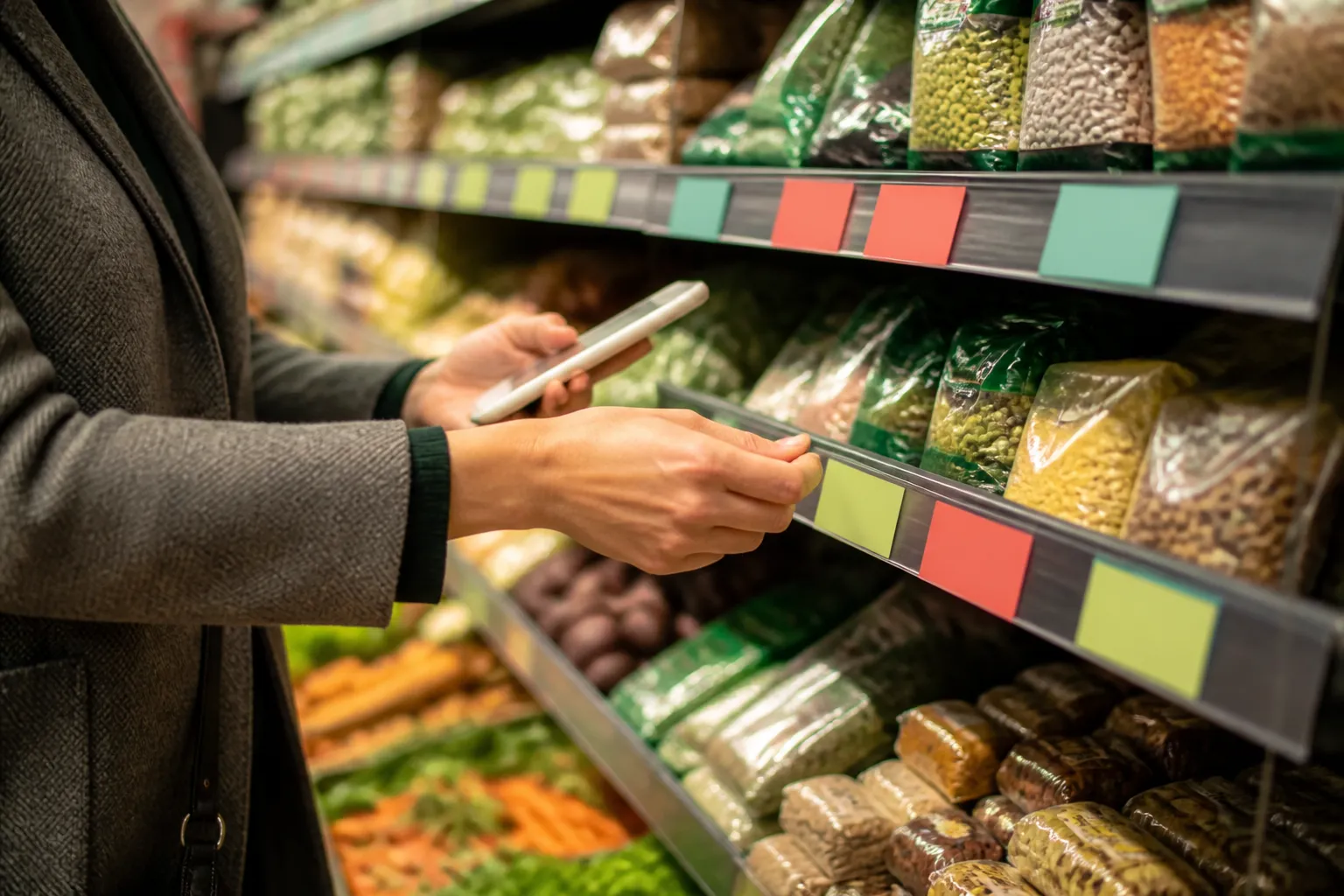
Before buying a sale item or using a coupon, check the final price and the amount required. A discount can be useful for food you already planned to buy, but it can also add an extra item to the cart. Bulk purchases deserve the same question: Will your household use the food before it goes bad, and is there room to store it?
Read the small number on the shelf tag
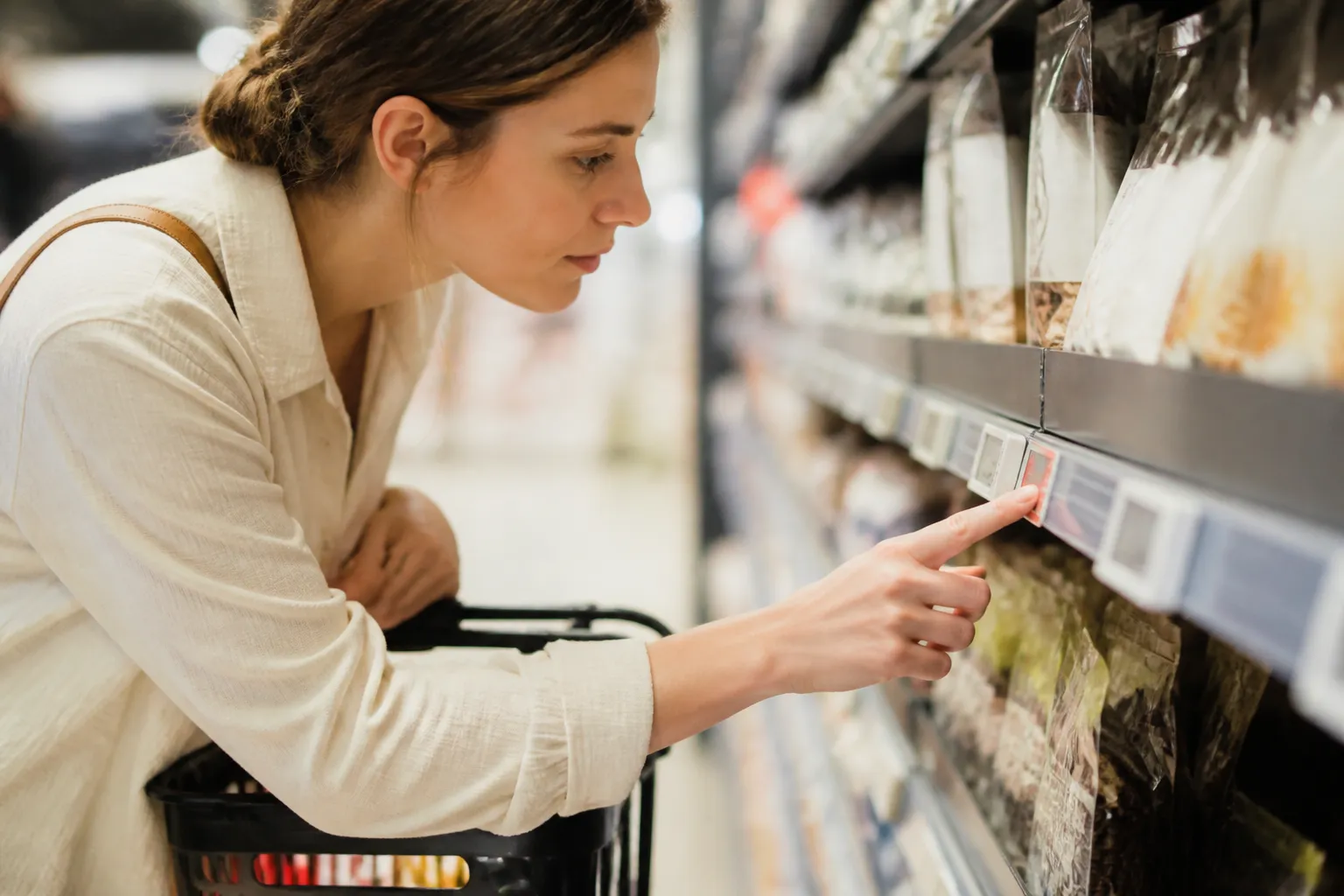
Package prices tell you what you pay at checkout. Unit prices tell you what you pay for a standard amount, such as an ounce or a pound. They make it easier to compare packages of different sizes. The unit price is often printed on the shelf tag, though you may need to calculate it yourself.
For example, a 12-ounce package costing $3 has a unit price of 25 cents per ounce. A 16-ounce package costing $3.60 works out to 22.5 cents per ounce. The larger package costs more upfront but less per ounce. That does not automatically make it the better purchase if you will not use all of it.
Make sure the labels use the same unit before comparing them. A price per pound cannot be compared directly with a price per ounce without converting one. For foods packed in liquid, or products prepared differently, consider how much usable food you get as well as the number on the tag.
Can a substitution do the job?
If a regularly purchased item has become expensive, look for another food that fits the same meal. A household concerned about beef prices might compare other protein foods, including beans or eggs, at current local prices. The best fit depends on dietary needs, preferences, preparation time, and what is available. An item that rose more slowly nationally is not necessarily cheaper at your store.
Compare the cost for the amount you expect to eat, not just the package price. Frozen, canned, and fresh versions may have different prices, shelf lives, and preparation needs. A smaller package can make sense when it prevents waste, even if its unit price is higher. Food has to make it from the cart to the table to be useful.
Use the data as a guide, not a guarantee
The USDA publishes a Food Price Outlook with forecasts of annual food price changes, updated monthly. The forecasts draw on the Consumer Price Index, which tracks changes in prices paid by urban consumers, and the Producer Price Index, which measures prices paid to domestic producers. Producer prices are not the same as prices on a grocery shelf.
Forecasts and national averages can help you spot broad trends, but neither predicts your next receipt. Track your own spending for a few months, compare similar purchases where you can, and note which categories changed most. Check any claim of a specific savings amount against its evidence. The shopping resources above offer general strategies, not a promise that a particular household will save a set number of dollars.
Please seek a professional. This article is general information, not financial, tax or insurance advice. Please seek a licensed financial, tax or insurance professional about your own situation.


