How do you make a monthly budget when your income refuses to arrive on a monthly schedule? Start with a modest number you can plan around, then give the extra money from stronger months a job before it disappears into everyday spending.
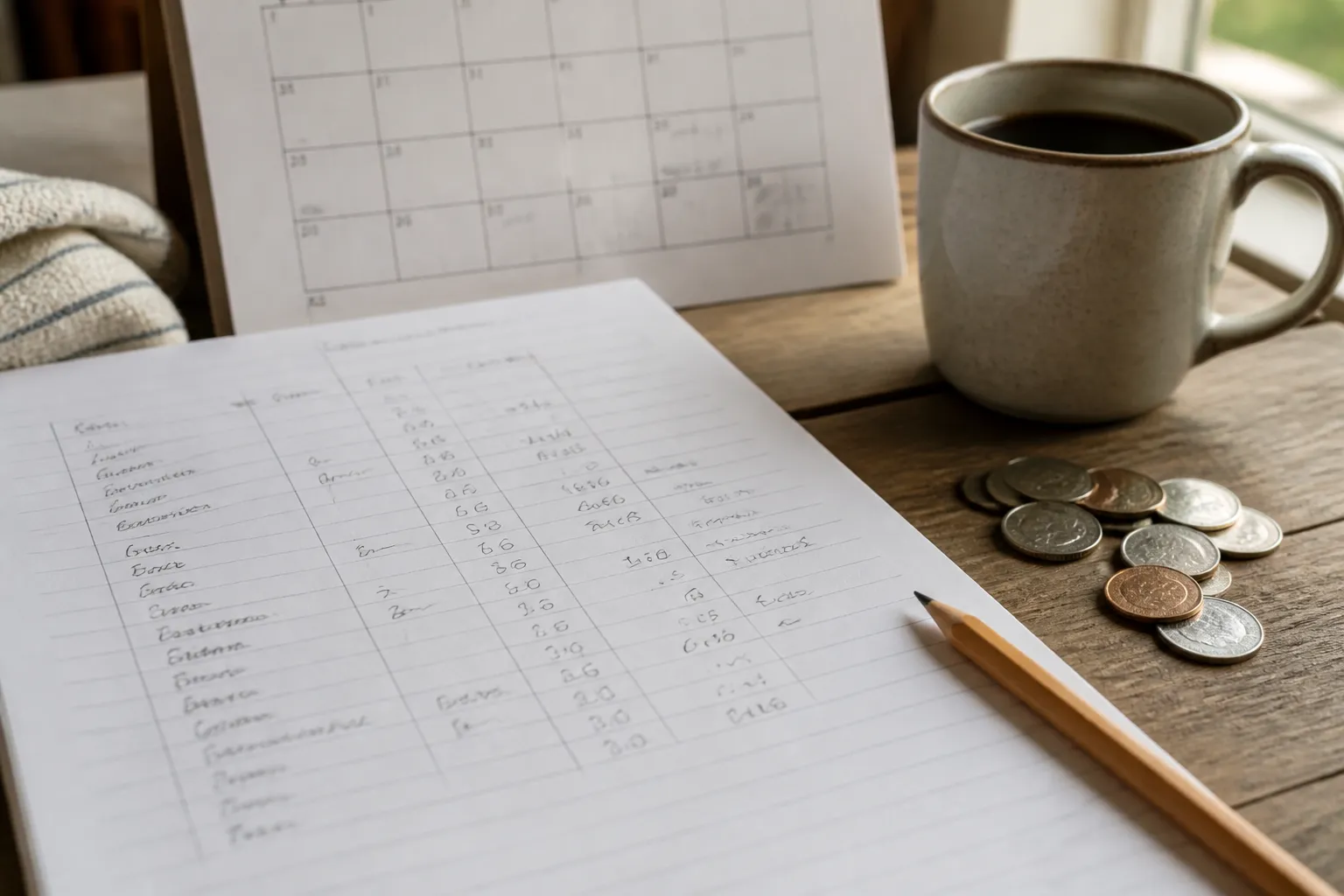
Irregular income can change in amount, timing, or both. A contractor might wait for an invoice to be paid, while a seasonal worker earns more during part of the year. A student may need to stretch a loan disbursement over several months. The bills, meanwhile, tend to show up right on cue.
A useful budget separates the money available for the month from the money that happens to arrive during it. That takes some preparation, especially when there is no cushion yet. But even a small reserve can help make the next uneven month easier to see coming.
Why budget around a baseline?
A baseline is a conservative monthly income figure used to plan ordinary spending. Think of it as the floor you build on, rather than the ceiling you reached in your best month. The Nebraska Department of Banking and Finance suggests looking at lower, consistent earnings instead of assuming every month will be a strong one.
A baseline is still an estimate, not a guarantee. If an invoice arrives late or work dries up, actual income can fall below it. That is why the plan also needs a way to rank bills and a cushion for gaps. If the baseline does not cover necessary expenses, the budget has exposed a real shortfall, not a failure to organize the numbers neatly.
How do you find a realistic number?
Look back over six to 12 months of income, if those records are available. Note when payments arrived and how much was available after business costs and money reserved for taxes, where relevant. Find the lower months that seem reasonably representative, then use a conservative figure as a starting point. A single unusually bad month may be worth noting separately, but it still belongs in the conversation about risk.
For example, suppose the amount available for living costs was $2,400, $3,200, and $4,100 over three different months. A budget built around $4,100 leaves a large gap when a $2,400 month returns. Using $2,400 as a starting baseline makes the difference visible. It does not mean that amount will arrive every month.
Next, compare the baseline with actual spending. Keep receipts or record purchases for at least a couple of weeks, and longer if possible. Include costs that do not arrive every month, such as an annual insurance premium. One way to plan for a known annual bill is to divide its expected cost by 12 and include that monthly amount in the budget. If the bill is due sooner, the monthly amount needed may be larger.
What should the money cover first?
Make a list of expenses in order of priority. Housing, food, utilities, transportation, insurance, and minimum debt payments are common starting points. Phone and internet service may also be essential for work or daily life. Some essentials, such as groceries and utilities, change in cost even though they cannot simply be skipped.
Then look at expenses with more room to adjust, such as dining out, entertainment, and shopping. The idea is to fund the most important categories first, rather than giving every category an equal share of a smaller month. If the baseline cannot cover essentials, the numbers may point to the need for lower costs, additional income, or a combination of both.
Taxes deserve a place in the plan when income arrives without withholding, meaning money has not already been taken from a payment for taxes. Freelance and gig payments often work this way. Amounts and obligations vary, so a sample percentage from someone else's budget is not a reliable bill.
How can a holding account smooth uneven pay?
One possible setup uses an income holding account and a separate account for expenses. Income lands in the holding account first. After accounting for applicable business costs and taxes, a planned amount moves to the expenses account monthly or twice a month. That regular transfer acts like a paycheck, even when the original payments arrive on an unpredictable schedule.
The calendar matters as much as the monthly total. If rent is due on the first and a client usually pays on the tenth, the money must be available before rent comes due. A holding account can bridge that timing gap once it has enough in it. Until then, a budget can show the gap without making it disappear.
In a higher-income month, extra money can remain in the holding account to support a future low-income month. Labeling the amount intended for upcoming bills and the amount held as a cushion can make the balance easier to read. The same dollar cannot cover both a bill next week and a surprise next month.
Where does an emergency fund fit?
An emergency fund is money reserved for unplanned costs, such as a car repair, medical bill, or loss of income. The Consumer Financial Protection Bureau describes a dedicated reserve as a way to help recover from financial surprises. It is different from money already set aside for a known annual bill.
A common longer-term reference is three to six months of expenses, but that can be a daunting first target. One month of bare-bones costs is a smaller milestone. Even before reaching it, setting aside part of a good month can create some breathing room. If the reserve gets used, future extra income can go toward rebuilding it alongside other priorities.
How often should the plan change?
A short weekly check can catch problems before a due date does. Review payments received, transfers made for expenses, the holding balance, and bills coming in the next few weeks. A paper notebook or spreadsheet can work. The important part is keeping the record current enough to trust it.
Some people use zero-sum budgeting, which means assigning every available dollar to a purpose, including bills, savings, and flexible spending. The total assigned matches the money available. The account balance may look healthy, but the plan shows how much of it already has a job.
Revisit the baseline when work patterns or expenses change. A higher baseline may be reasonable after a sustained increase in income, while a lower one can make sense when work slows. The budget is a working map, and a quick correction is more useful than waiting for the month to end in a surprise.
Please seek a professional. This article is general information, not financial, tax or insurance advice. Please seek a licensed financial, tax or insurance professional about your own situation.