











Where did the money go? A bank balance can tell you what is left, but it cannot always tell you why. A month of spending records gives you a closer look, from the rent payment you expect to the small purchases you barely remember.
Why track a full month?
A week can be an odd little snapshot. Maybe you stocked up on groceries, took a trip, or stayed home more than usual. A month is more likely to capture recurring bills and everyday habits in the same frame. The Consumer Financial Protection Bureau suggests tracking for at least two weeks, or even a month, to get a better picture of spending.
Think of the exercise as gathering ingredients before you make a budget. You are recording what happened, not grading yourself. A $4.50 coffee on 20 workdays, for example, adds up to $90. That number does not decide whether coffee is worthwhile. It gives you something more useful than a guess.
Set up one place to record spending
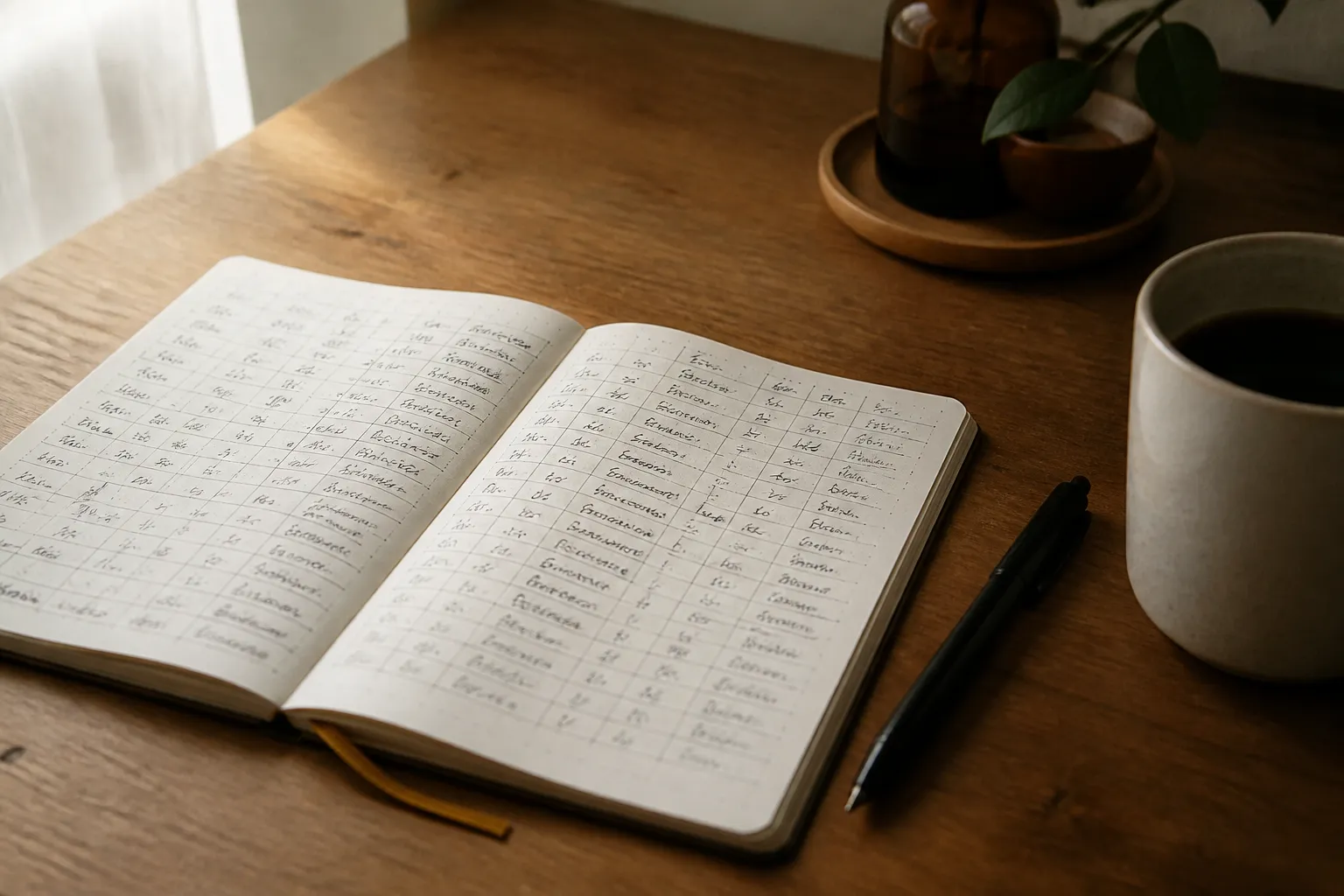
A notebook or spreadsheet can work. The important part is having one place where the month comes together. You do not need to connect a financial account to keep a record by hand. Pick a start date, mark the end of your month, and leave room for new entries each day.
For each purchase, record the date, what you bought, the amount, how you paid, and a category. A row might read: September 20, bus fare, $2.50, cash, transportation. If a single receipt includes groceries and a household item, you can split the amounts between categories. If that level of detail makes the log hard to maintain, put the purchase in the category that best fits.
Around 10 to 12 categories is a workable starting point. Housing, utilities, groceries, dining out, transportation, health, insurance, childcare, subscriptions, personal care, entertainment, and gifts are examples. Adjust the list to fit your life. The goal is to spot patterns, not to become the world's most meticulous receipt sorter.
Try to enter cash and card purchases on the day they happen. Keep receipts or make a quick note when a receipt is not available. The CFPB also suggests using account histories and saved receipts to check for expenses you may have missed. Looking back through several months can also reveal bills that do not appear during your tracking window.
Keep income and transfers separate
Spending is one side of the picture. Record money coming in, too, using a separate income section. Depending on your circumstances, that could include pay from more than one job, self-employment income, child support, or government benefits. Record the amount received and the date, so you can compare the month's income with its expenses.
Some money movements are transfers rather than purchases. Suppose you withdraw $40 from an ATM and later spend $15 of it on lunch. If you count both the withdrawal and the lunch as spending, you count that $15 twice. Note the withdrawal as a transfer and record the lunch when you buy it. The remaining cash is still available, not yet spent.
Credit card payments need the same distinction. If you record each card purchase as an expense, mark the payment to the card account as a transfer rather than another purchase. Interest and fees can be recorded separately as expenses. This approach tracks when charges occur, so purchases from a previous month may appear on a bill you pay during your tracking month. Keep that timing difference in mind when comparing spending with the cash leaving your account.
Check the record once a week
A short weekly check can keep a missed receipt from turning into a mystery at month end. Choose a regular day and spend about five minutes comparing your entries with receipts and account activity. Add anything you missed, including small cash purchases, and correct any duplicates.
What if you forget several days? Fill in what you can from the records you have and keep going. An imperfect month can still show useful patterns. If the daily log feels overwhelming, the CFPB suggests starting with expenses one week at a time.
Also make a note of expenses that fall outside this month, such as an annual subscription, car registration, or holiday gifts. They may not belong in this month's spending total if you did not pay them during the window. They do belong in your broader picture of the year.
Review the month and look for patterns
At the end of the month, add up each category and compare the total with the income you recorded. Then look beyond the grand total. A category can contain a need, a want, or both. An expense can also be irregular, meaning it does not arrive every month. For example, a necessary car registration fee may be irregular, while a monthly entertainment subscription may be a want.
Some obligations, such as rent or childcare, may be difficult to change quickly. Other costs may have more room to move, though what counts as necessary depends on the person and the situation. These labels are prompts for thinking, not universal rules.
Ask a few questions as you read the totals: Which expenses surprised you? Did weekday spending look different from weekend spending? Are you paying for subscriptions you no longer use, or account fees you could avoid? Did your spending reflect the things you care about? The answers may be more revealing than any single receipt.
Use what you learned next month
The record can become a starting point for a budget, which is a plan for how money will come in and go out. If you want to test a change, make it specific enough to observe. You might track dining out separately for another month, for example, and compare the two totals. A different month may bring different bills or circumstances, so a change in the number will not always have one simple cause.
You do not need to overhaul every category at once. A few observations, a complete record, and another month of comparison can tell you more than a long list of resolutions. This is general education, not personal financial advice. Any decision depends on your own circumstances.
Please seek a professional. This article is general information, not financial, tax or insurance advice. Please seek a licensed financial, tax or insurance professional about your own situation.


