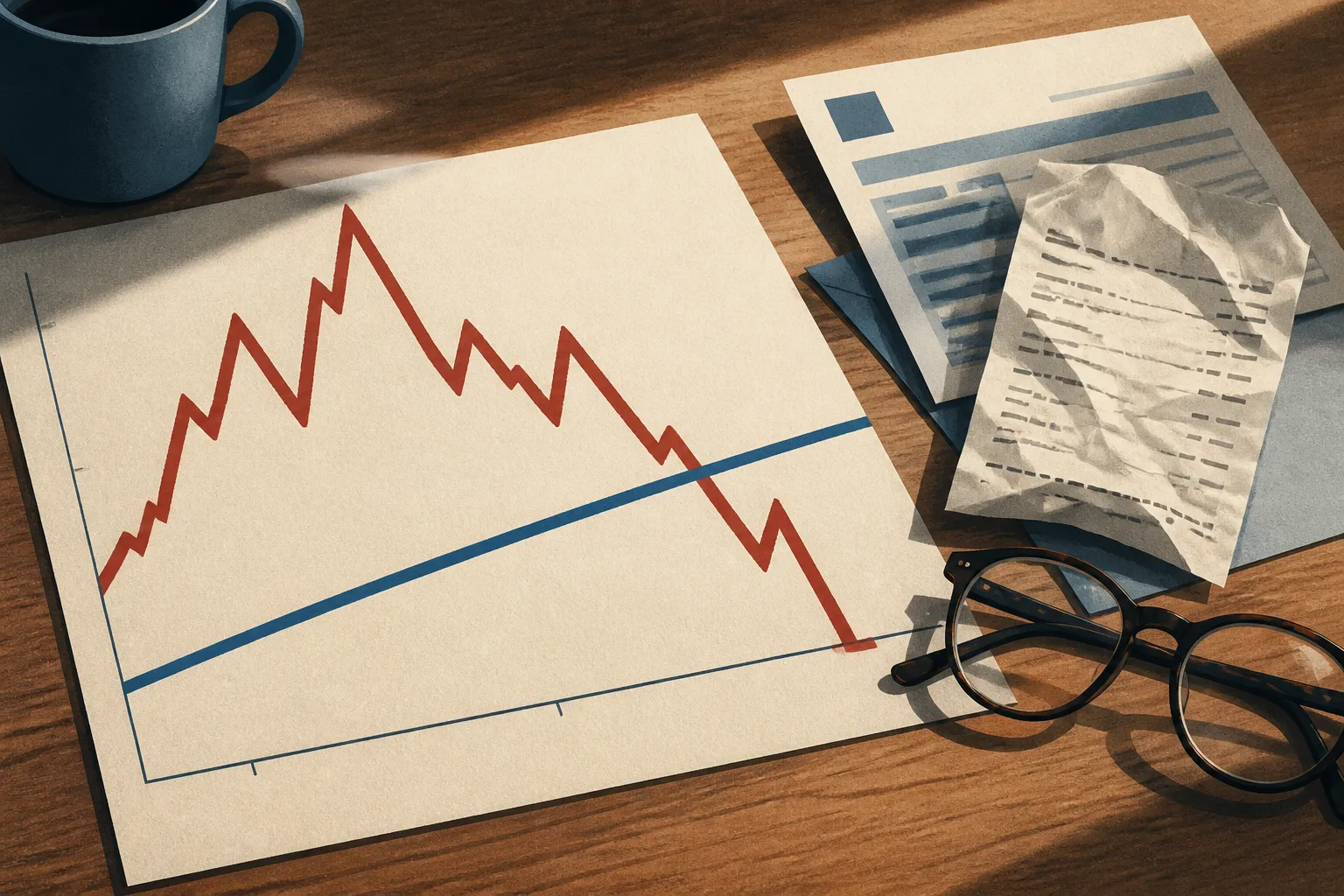











News stories often put recession and inflation in the same sentence. They are not the same thing. A recession is a slump in economic activity. Inflation is about prices, and the sources behind this piece do not cover it. What they do cover is how recessions get called, and that process is less tidy than most headlines suggest.
What Recession Means in Everyday Use
In everyday talk, a recession means a marked slippage in economic activity. Businesses make less. Households spend less. The U.S. Bureau of Economic Analysis describes it as a general idea, not a precise formula. So no single number automatically says an economy is in trouble.
Economists do watch gross domestic product, or GDP, which the BEA calls the broadest measure of economic activity. When GDP grows, more is being produced. When it shrinks, less is. That is why quarterly GDP reports get so much attention.
Expansion is the normal state of the economy. According to the National Bureau of Economic Research, most recessions are brief. That does not make one painless. It does put a downturn in context.
Why the Two-Quarter Rule Is Not the Official Test
A popular shortcut says a recession starts after two straight quarters of falling GDP. It is simple, and it shows up all over financial coverage. But the BEA states plainly that this is not the official designation of a recession in the United States.

Negative GDP growth and recessions tend to move together. They are not identical, though. The BEA notes that the NBER leans on monthly indicators, especially employment, so the two-quarter rule does not always hold. Output could dip for two quarters while jobs keep growing. In that case the committee may not call a recession.
The gap makes sense when you think about timing. GDP arrives in three-month blocks. The economy moves month to month. A downturn can start late in one quarter and fade early in the next, and the quarterly figures blur it.
How the NBER Officially Dates Recessions
No government agency makes the official call. The Business Cycle Dating Committee of the NBER, a private non-profit research organization, does. It keeps the chronology of U.S. business cycles and names the months when activity peaked and bottomed out.
The structure is simple. Expansions run from a trough to the next peak. Recessions run from a peak to the next trough. By convention, the peak month is the last month of the expansion, and the trough month is the last month of the recession.
The NBER dating procedure FAQ defines a peak as the month when a variety of indicators reach their highest level before a significant decline. A trough is the month when activity hits a low and then begins a sustained rise.
The NBER treats a recession as a monthly concept. It weighs indicators such as employment, personal income and industrial production, along with quarterly GDP growth. Those monthly readings explain why official dates can differ from the two-quarter shortcut.
Where Inflation Fits, and What the Sources Leave Out
This is where the comparison in the title runs into a limit. The BEA and NBER pages used here do not define inflation or explain how it differs from a recession. They also do not say how either one affects household budgets, jobs, borrowing or savings.
As a general aside not drawn from these sources, inflation usually means a broad rise in prices over time. The recession dating process described above is built on activity measures like output, jobs and income, not on price indexes. That is the practical difference for a reader. One label comes from a committee reviewing activity. Price changes are tracked separately.
The sources also leave out several other things:
- How large a decline must be to count as significant, or how long it must last.
- Current economic conditions or any recent NBER decisions.
- What the Federal Reserve or other agencies do in response.
So a reader who wants the price side of the story needs a separate source. A government price index would be the natural place to start, but none is cited here. For now, the safest takeaway is narrow. When a headline says recession, check whether it means the two-quarter shortcut or the NBER call. They can disagree.