










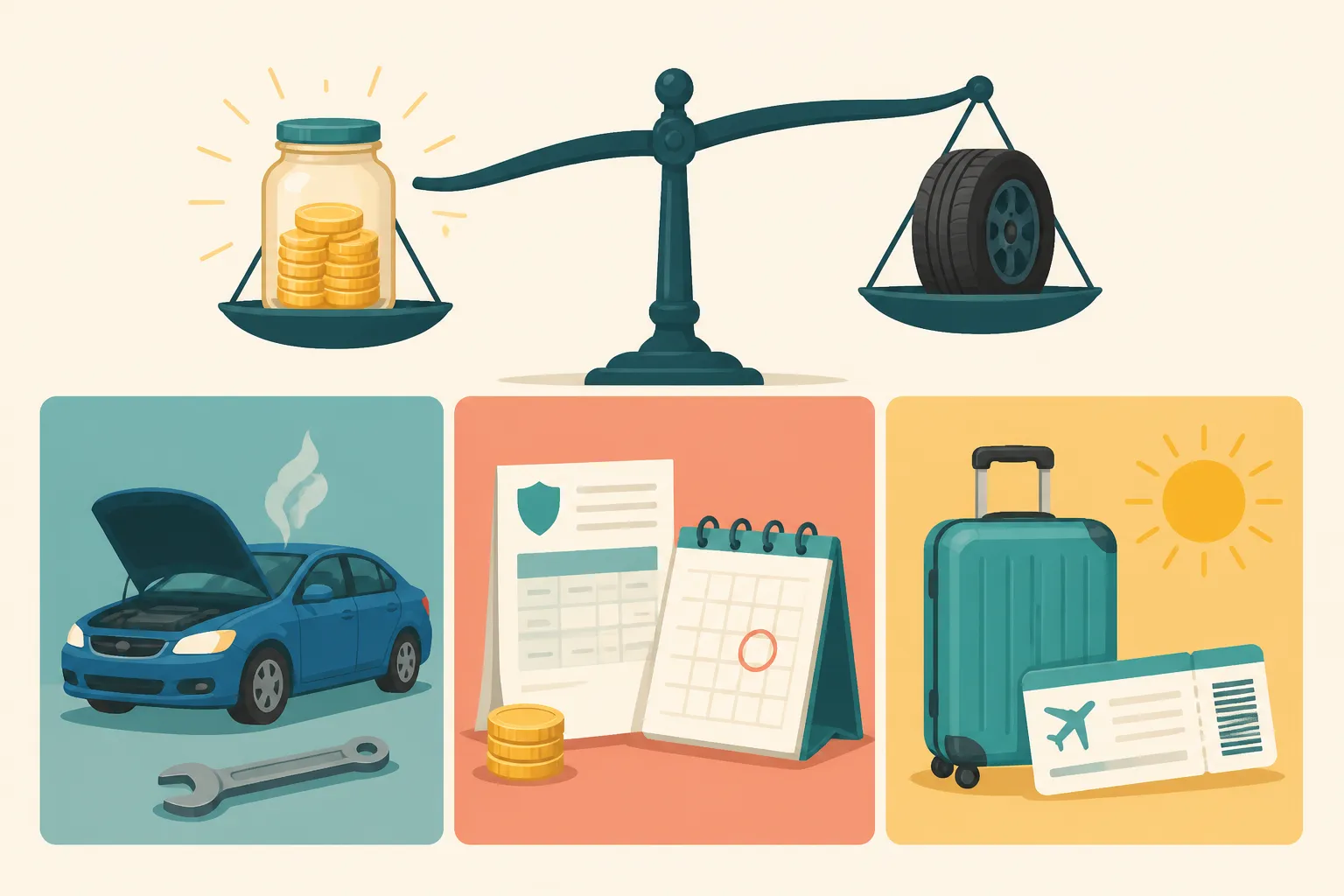
The car will not start. The annual insurance bill is due. A friend invites you on a last-minute trip. All three can put pressure on your checking account, but do they all count as emergencies? A useful test asks three questions: Is the cost necessary, unplanned, and time-sensitive? The answers can help separate a genuine surprise from an expense that needs a place in the regular budget.
What is an emergency fund for?
An emergency fund is money set aside for unexpected expenses or financial emergencies. The Consumer Financial Protection Bureau gives examples including car repairs, home repairs, medical bills and loss of income. The expense does not have to be enormous. A smaller unplanned bill can still disrupt a tight month.
Think of the fund as a spare tire for your budget. It is there to help when the usual plan cannot get you where you need to go. Having money available for an unexpected cost may help prevent a missed bill or the need to take on debt. Keeping it separate from everyday spending money can make it easier to preserve for that purpose.
A reserve does not have to begin with a large deposit. The CFPB notes that setting aside even a small amount can be a first step. The aim is to have some room to respond when a surprise arrives, then get back to other savings goals.
Does the expense pass the three-question test?
Start with necessity. Does the expense protect a basic need, your health, your ability to work or the safety of your home? A repair to the only car you rely on for work may qualify. A new outfit for a planned party probably does not.
Next, consider surprise. An annual fee can be unpleasant, but its arrival is generally predictable. Gifts, planned travel and routine maintenance also tend to fit better in the regular budget or a separate savings category. Setting aside money for those costs can keep them from competing with emergencies.
Finally, ask about timing. A water heater that fails and floods the kitchen needs attention soon. A worn but working appliance you hope to replace someday may allow more time to plan. The three-part test is a guide, not a rulebook: details matter, and a necessary cost can become more urgent if waiting would cause additional damage.

How much should the fund cover?
Financial planners often suggest a reserve of three to six months of living expenses, according to one guide to emergency funds. That is a common benchmark, not a number that fits every household. Reaching even one month of essential expenses can be a useful starting point for estimating a longer-term goal.
To calculate that month, look at actual amounts paid in recent statements rather than relying on a guess. Add up housing, basic utilities, groceries, transportation needed for work, insurance premiums, necessary healthcare, minimum debt payments and costs for dependents. Leave out entertainment and nonessential subscriptions. The result is an estimate of what it takes to cover essentials, not every dollar spent in an ordinary month.
For example, if those essential costs total $3,000 for a month, a three-month benchmark would be $9,000 and a six-month benchmark would be $18,000. Those figures illustrate the math, not a target for every household. A smaller starting goal can make the calculation less daunting.
Why might one household need a longer cushion?
Income is one part of the picture. A household with two stable, independent incomes may face different risks from one relying on a single income, seasonal work or irregular pay. Someone whose job could take a long time to replace may also want to consider a longer coverage period.
Insurance coverage and other reliable resources matter too. An insured repair can still leave a cost to pay, and available support can differ from one household to another. These are reasons to treat the three-to-six-month range as a starting point for discussion, rather than a pass-or-fail test.
Statements can also help show how long an existing reserve might last. If essential expenses change, the estimate changes with them. A household that has added a dependent or moved to a more expensive home, for example, may find that an old monthly figure no longer reflects its costs.
What should you check before using the money?
Run through the necessity, surprise and timing questions first. Then check how the expense fits into the fund’s purpose. If savings are covering a month of lost income, housing and groceries may already be included in the monthly essential-expense total. Counting them again as a separate emergency amount could make the estimated need look larger than it is.
The reverse can also be true: an unexpected repair may sit outside the ordinary monthly total. Identifying that difference helps clarify what the reserve is being asked to cover. It does not make the decision automatic, but it gives the numbers a little more meaning.
None of these questions can determine the right amount or choice for a particular household. For a decision about your own finances, a qualified professional who understands your full situation can help you consider the details.
Please seek a professional. This article is general information, not financial, tax or insurance advice. Please seek a licensed financial, tax or insurance professional about your own situation.


