










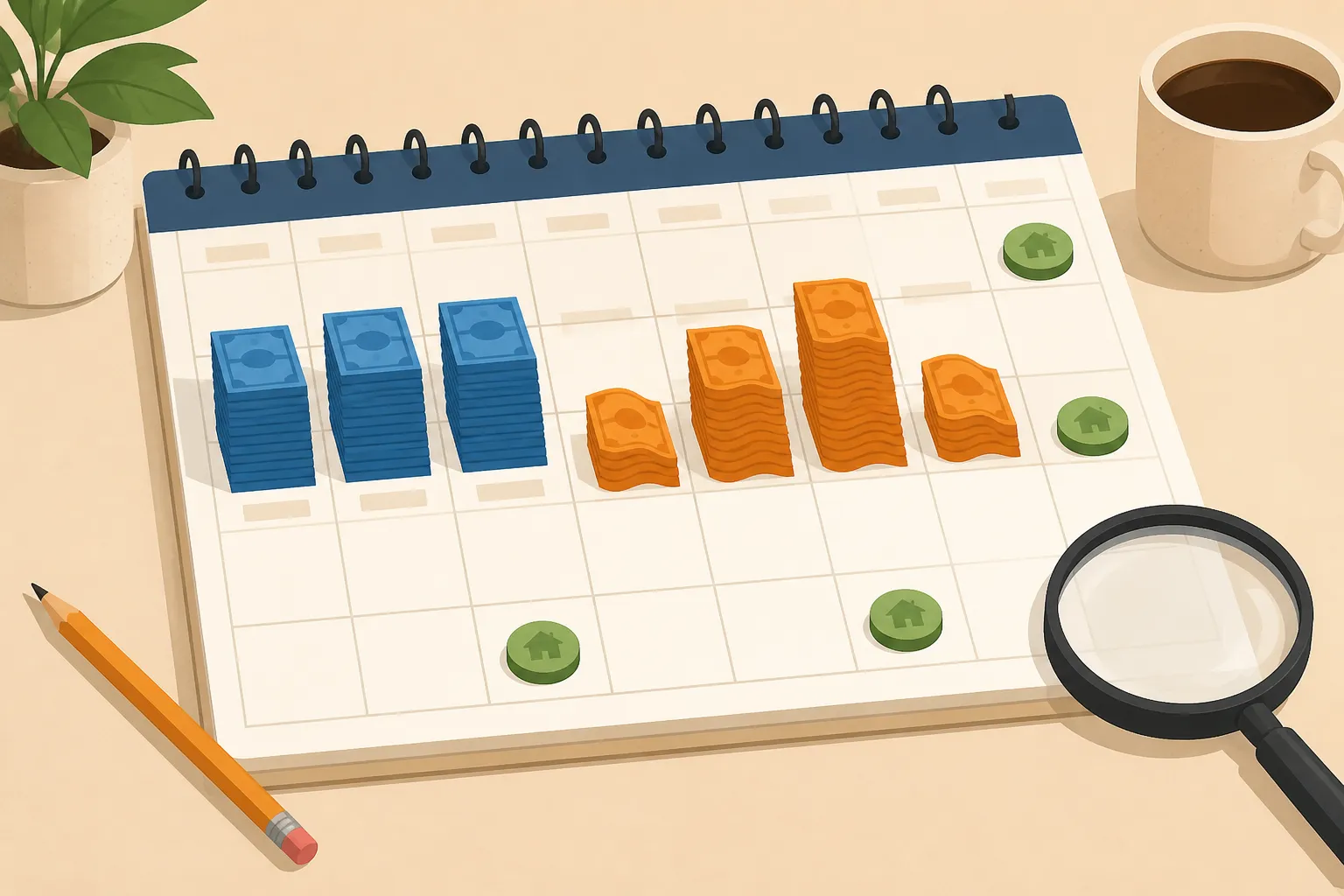
Why can a budget look comfortable in one month and crowded the next? Some costs arrive like clockwork, while others change or show up only a few times a year. Sorting expenses by their amount and timing can make those differences easier to see.
What are fixed, variable, and periodic expenses?
A fixed expense generally costs the same amount each month and is due on a predictable schedule. Rent, a car payment, internet service, and a monthly subscription can fit this pattern. A fixed monthly mortgage payment may fit too, although the total housing payment can change if other charges included in it change.
A variable expense is a cost whose amount can change from one period to the next. A grocery bill, for example, may be higher in a month with extra meals at home. Variable does not automatically mean optional. Food is necessary even when the amount spent on it moves around.
A periodic expense comes around regularly but not every month. An annual membership renewal or quarterly property tax bill may fit. Holiday and back-to-school spending can also recur at particular times of year, though the total may differ each time.
There is some overlap. An annual membership may have a fixed price for the year and still be periodic because of its timing. Think of these labels as two questions rather than three sealed boxes: Does the amount change? And when is the payment due? Money Management International describes fixed and periodic expenses, though the material reviewed does not provide a complete test for every expense.
Why are fixed expenses easier to track but harder to cut?
A fixed monthly payment is a useful landmark. If an internet bill stays at $60 for several months, that amount is relatively easy to place on a monthly expense list. It also shows how much money is already committed before groceries, gas, or less frequent bills enter the picture.
Changing the payment can be another matter. A lease or loan may involve an obligation to pay, so the amount may not be easy to reduce on short notice. Even a subscription that can be canceled may have terms or a billing date worth checking. A predictable bill can still take up more room in a budget than expected.
And fixed does not mean fixed forever. A rate or payment may hold for a set term and change at renewal. The old amount is a useful record, but it is not a guarantee of the next one. Keeping the renewal date alongside the current amount makes that distinction visible.

How can periodic bills fit into a monthly picture?
A bill that is not due this month can still matter to this month’s planning. Vehicle registration, annual memberships, and some property tax payments are easy to miss when a list includes only the bills paid every month. Maintenance can also be a recurring cost, although a particular repair may not arrive on a regular schedule.
One way to understand a periodic cost is to translate it into a monthly equivalent. Suppose an annual renewal costs $120. Dividing that amount by 12 gives $10 per month. That does not change the due date or turn the renewal into a monthly bill. It simply gives the annual cost a place in a monthly picture.
The timing still matters. If the renewal is due in three months, a full year’s worth of monthly planning time is not available before that payment. The amount can change, too. A past bill offers a starting point for an estimate, not a promise about the next charge.
It can also help to look for busy stretches on the calendar. A registration renewal, school supplies, and a holiday trip might land near one another. Seeing the cluster shows when several costs could compete for the same cash, even if each one looks manageable on its own.
How do you sort an expense that changes?
Start with the bill’s behavior, not its name. A monthly utility payment may vary with usage or rates, so its due date can be predictable while its amount is variable. An insurance premium paid once a year may stay the same for that term, but its annual timing makes it periodic in a monthly view.
A simple record can hold both details: the expense, its usual amount or recent range, and when it is due. For instance, a grocery entry might show a range based on recent months rather than one exact number. An annual renewal entry might show the last charge and the next expected date. A range is an estimate, not a ceiling.
Some costs need a note rather than a neat label. Home maintenance may include routine tasks and unexpected repairs. A subscription may be fixed for its current term but rise later. Marking what is known and what could change is often more useful than arguing with the category.
What does sorting tell you about a budget?
The categories make different questions easier to ask. Fixed costs show regular commitments. Variable costs show amounts that move. Periodic costs show payments that may be absent from a typical month but still belong in the year. Together, they offer a clearer view of cash flow, meaning money coming in and going out over time.
The Consumer Financial Protection Bureau developed a classroom activity on fixed and variable expenses that asks students to sort scenarios and compare the two types. The activity is designed for high school students. The worksheet itself was not readable in the material reviewed, so its specific scenarios and answers are not available here.
Sorting is a starting point, not a complete budget or a set of instructions for cutting costs. The sources reviewed do not provide a full method for reducing variable spending or handling every renewal increase. They do point toward a useful habit: give each expense both a number and a date, then keep the uncertainty visible when either can change.
Please seek a professional. This article is general information, not financial, tax or insurance advice. Please seek a licensed financial, tax or insurance professional about your own situation.


