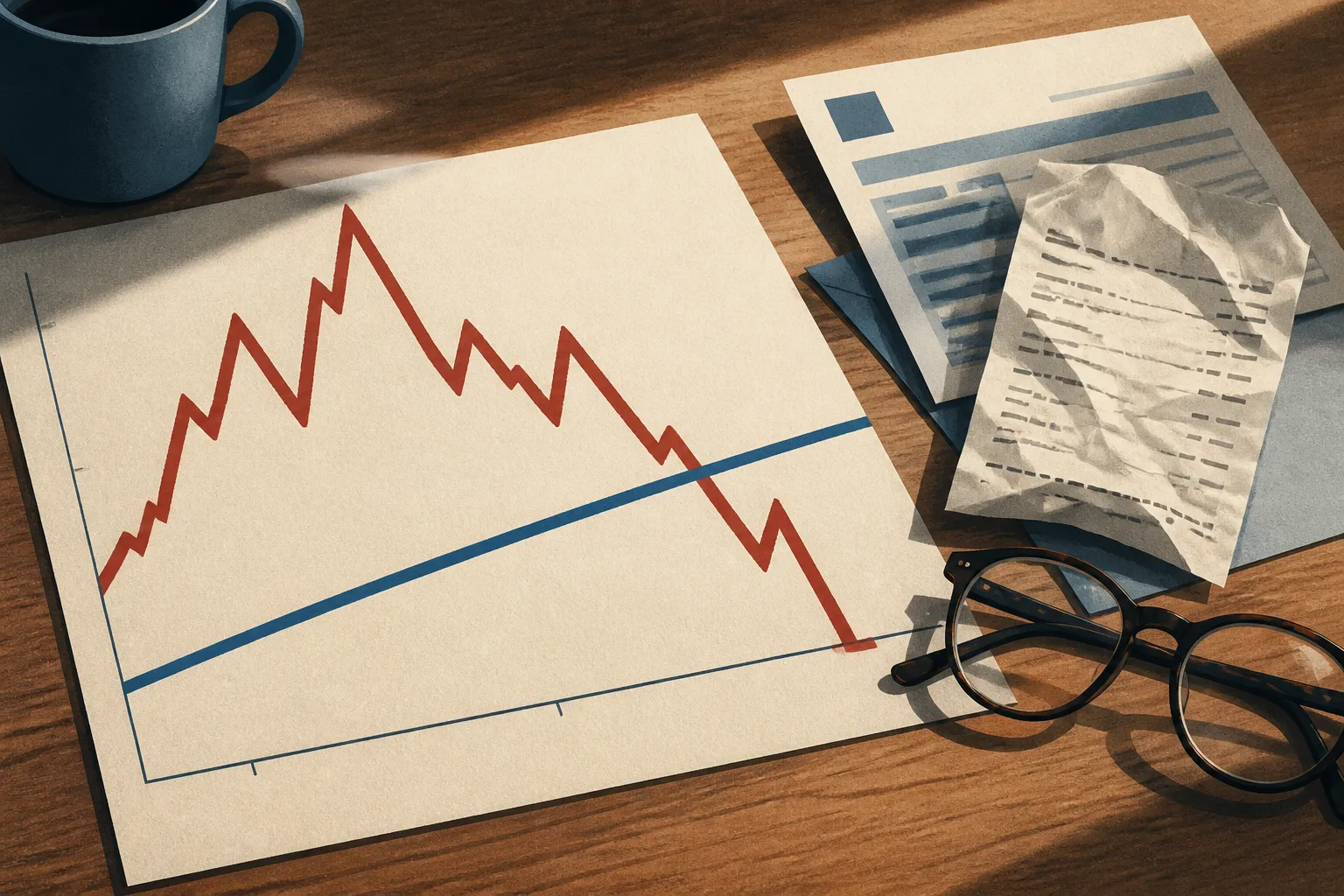

A household budget drafted in January rarely accounts for the full path of price movements across the calendar year. Between shifting utility rates, food costs, and insurance renewal premiums, the spending targets set during winter often lose precision by early summer. Setting up a methodical review schedule lets you measure where actual costs diverged from early estimates, test your savings assumptions, and adjust your allocation targets before minor deficits accumulate.
- Verify net household income against scheduled fixed obligations, noting any midyear shifts in take-home pay or contracted bills.
- Calculate the trailing three-month variance across essential variable categories such as groceries, automotive fuel, and home energy.

- Evaluate liquid emergency reserves against current monthly outlays to verify that your buffer still reflects prevailing replacement costs.
- Rebalance discretionary allocations and planned savings contributions based on documented price changes rather than original January forecasts.
Why a midyear review matters when prices move
Traditional household budgeting relies heavily on static annual baselines and variance analysis, where spending overages are treated as individual errors against a fixed target. In corporate finance, organizations often move away from static planning toward rolling forecasts that update as conditions shift. Households can apply the same principle. Rather than treating a spending plan as an unchangeable yearly mandate, treating it as a dynamic working framework ensures your targets reflect the actual purchasing power of your income.
Macroeconomic data shows how price levels move unevenly through the broader economy. According to the Bureau of Economic Analysis, the PCE price index rose 3.6 percent from September 2025 to September 2026, while the index excluding food and energy climbed 3.1 percent over the same twelve-month window. While these aggregate federal numbers describe national trends rather than individual pocketbooks, they demonstrate that price changes are continuous. A midyear audit helps you see whether your private household costs are climbing faster, slower, or in line with national averages.
Conducting a midyear financial checkup also enables you to evaluate emergency funds, total expenditures, and outstanding debt concurrently. Because changes in everyday living expenses directly influence how much surplus cash remains at the end of the month, looking at these three components together prevents you from solving a cash shortage in one category by quietly undermining another.
Choosing a review cadence
There is no universal mandate governing how frequently a household must examine its balance sheet. The ideal frequency depends on your income structure and the proportion of your expenses that fluctuate from month to month. A household with salaried earnings and locked annual contracts may only require a formal midyear inspection, whereas freelance workers or households facing volatile utility costs often benefit from monthly spot-checks.
A practical method pairs brief monthly tracking with a deeper midyear evaluation. During monthly maintenance, you simply verify that recurring bills cleared and check whether total spending stayed within broad limits. The midyear session is more thorough. It provides dedicated time to assess whether long-term savings goals remain practical and whether your safety buffers need reinforcement.
When structuring your reviews, picking practical instruments keeps the process manageable. The CFPB Your Money, Your Goals toolkit offers modular materials and worksheets designed to fit different time constraints and household situations. Matching the depth of your review tools to your available time helps prevent administrative fatigue, making it far more likely that you will complete the assessment.
What to check at each review
Every review session should begin with a direct comparison between planned numbers and realized spending. Work through your primary cash flow statements, tallying what came in against what went out. Pay particular attention to fixed expenses that reset midyear, such as vehicle registration, property taxes, or renewed insurance policies. Comparing these specific line items against federal price metrics, including the Bureau of Labor Statistics Consumer Price Index, clarifies whether an escalating bill reflects an isolated rate change or a broader sectoral shift.
The next priority is inspecting your liquid reserves. Under guidelines from the Consumer Financial Protection Bureau, an emergency fund is a cash reserve set aside for unplanned expenses or urgent events, such as automotive breakdowns, home system failures, unexpected medical bills, or sudden income loss. During a period of changing prices, the cost to repair a vehicle or replace an appliance generally rises. You must evaluate whether your existing reserve balance remains sufficient to cover these shocks at present retail costs.
A thorough review also identifies whether your emergency capital has experienced scope creep. If reserve funds were withdrawn to cover standard utility bills or routine grocery runs, that capital was deployed for operational shortfalls rather than true emergencies. Recognizing this diversion allows you to recalibrate your core monthly spending plan and establish a methodical schedule to replenish the designated emergency balance.
Reading official price data without over-reading it
Government indexes provide valuable macroeconomic context, but they require careful interpretation when applied to domestic finances. In their September 2026 data release, the Bureau of Economic Analysis reported that personal consumption expenditures climbed 0.5 percent on a monthly basis, while personal income grew by 0.2 percent. As a result of higher price levels, real disposable personal income decreased by 0.3 percent for the month, and the personal saving rate settled at 3.8 percent of disposable income.
These figures confirm that broad price changes can compress household margins even when nominal wages rise. However, national indexes aggregate millions of transactions across distinct geographic zones and consumer demographics. Your personal expenditures will naturally diverge from headline figures based on whether you commute by car, rent your residence, or purchase specialized medical care. Treat federal data releases as contextual guideposts rather than direct blueprints for your private budget.
Common pitfalls and questions to ask
The most pervasive hazard in budget management is inertia. Retaining an unadjusted annual spending plan when market prices have moved creates phantom surpluses on paper that do not exist in your checking account. When expenses inevitably exceed those outdated expectations, households often abandon tracking altogether instead of simply adjusting the baseline.
To maintain clarity during your review, answer several concrete questions in writing:
- Has the emergency fund kept pace with the replacement costs of major household assets?
- Which specific utility or recurring subscription categories experienced the largest percentage growth since the winter baseline was set?
- Are monthly transfers toward defined savings goals continuing as scheduled, or have routine outlays begun to erode those allocations?
- Does the current cash allocation accurately mirror verified income and active financial obligations?
Federal agencies and research sources do not publish a rigid, one-size-fits-all calendar specifying exact review dates, mandatory reserve targets, or line-by-line category caps. Financial management remains an empirical process tailored to individual circumstances. Establishing a reliable midyear checkpoint ensures your financial plan stays aligned with economic reality throughout the entire year.
Please seek a professional. This article is general information, not financial, tax or insurance advice. Please seek a licensed financial, tax or insurance professional about your own situation.