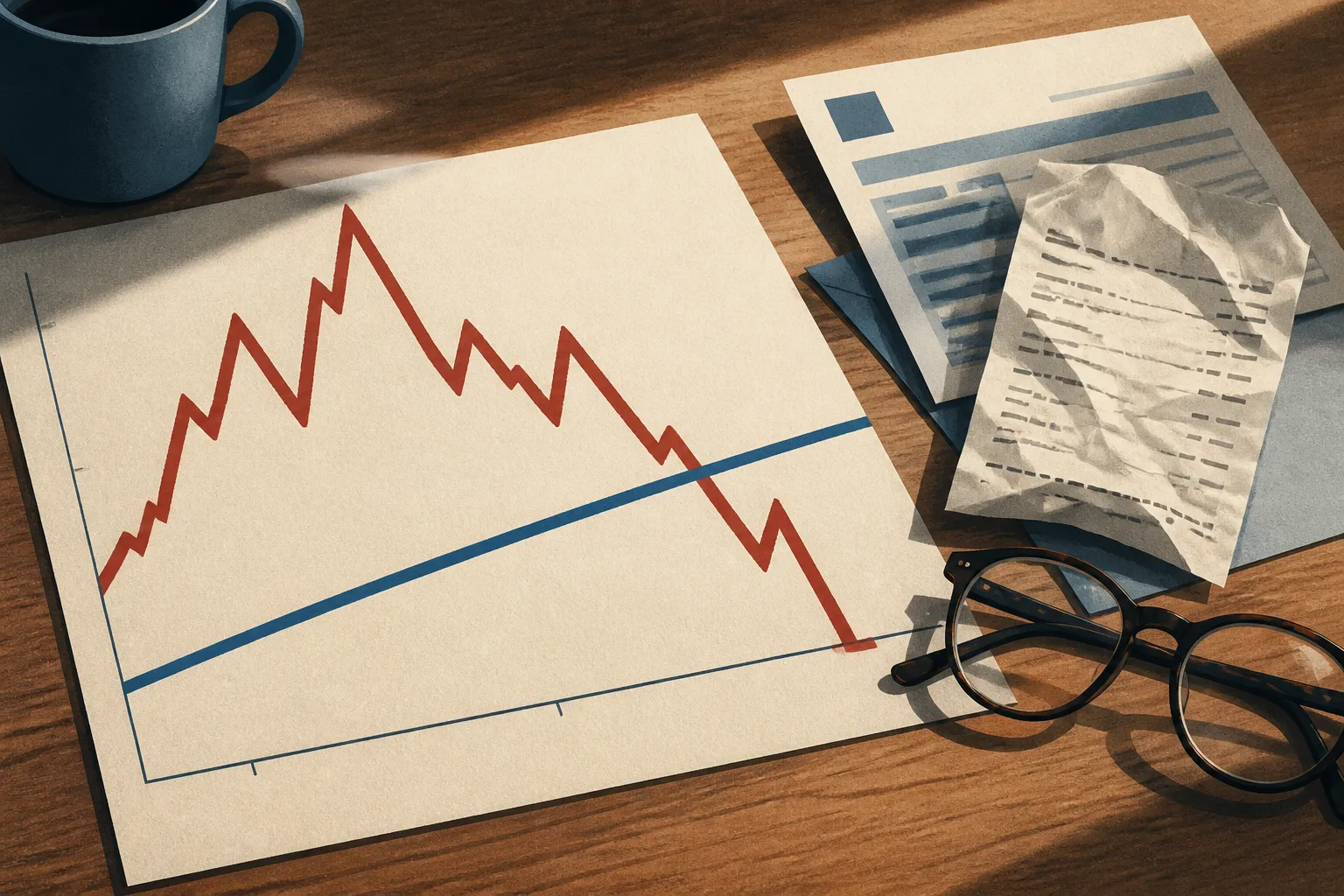

A down payment goal is almost always set in nominal dollars, but inflation changes what those dollars can actually buy. When prices across the economy rise, households saving for a home can find themselves chasing a moving target. Testing a savings plan against changing prices and living costs requires a structured look at cash reserves before committing funds to a real estate purchase.
- Calculate total liquid assets: Add up all cash savings and accessible investment balances that could theoretically be used for a home purchase.
- Subtract non-housing goals and project costs: Remove funds earmarked for vehicle replacements, career transitions, moving expenses, and initial home repairs.

- Set aside an emergency cushion: Reserve three to six months of mandatory living expenses that will remain untouched after the sale closes.
- Assess net closing capital: Use the remaining balance to weigh down payment options against separate closing costs, loan terms, and moving expenses.
How inflation erodes a fixed savings target
Inflation reduces the real value of cash savings over time. A bank account balance can increase in dollar terms because of accumulated interest while the goods and services it can purchase decline in quantity over that same period. An economic explainer from Norges Bank illustrates this balance: if a deposit earns an interest rate of 1 percent while general inflation runs at 2 percent, the real interest rate is negative, at roughly minus 1 percent. In that scenario, the deposit loses purchasing power even though the nominal statement balance climbs.
Cash savings only gain real value when the real interest rate is positive, which happens when the yield earned on the account exceeds the prevailing inflation rate. A prospective homebuyer who targets a fixed cash sum for a down payment can end up with less purchasing power than expected if consumer prices and broader housing costs increase faster than the interest earned on those deposits. Tracking official price measurements, such as updates published by the U.S. Bureau of Labor Statistics, helps savers observe broader cost trends over multi-year timelines.
Working out how much cash is actually available
Determining an effective down payment starts with an honest tally of existing funds. Guidance from the Consumer Financial Protection Bureau outlines a direct subtraction method: begin with total savings and investment balances, then deduct cash dedicated to other life goals, moving costs, and initial renovation work. From the remaining amount, subtract an emergency cushion.
A common baseline for that emergency cushion is three to six months of living expenses. Ring-fencing that money ensures that a household does not spend all its liquid capital at the closing table, leaving it vulnerable to unexpected job disruptions or urgent home maintenance immediately after moving. As the Consumer Financial Protection Bureau notes in its homebuyer preparation guide, buying readiness means having cash for a down payment alongside dedicated funds for closing costs, moving, furniture, utility deposits, and ongoing repairs.
Weighing down payment size against closing costs and reserves
A down payment is the portion of the purchase price that lenders expect buyers to provide from their own funds at closing. On a $200,000 property, a standard 20 percent down payment is $40,000. While some loan programs accept lower down payments or none at all, putting more cash down can make loan approval smoother and may reduce the interest rate a borrower receives over the life of the loan.
However, closing costs are separate from the down payment. These fees depend on the final purchase price, down payment size, specific lender charges, mortgage product, and geographic location. Pouring every accessible dollar into the down payment to hit a specific percentage can backfire if it wipes out the cash needed for settlement fees or drains the emergency reserve. Balancing these components depends on an individual household budget, total debt load, and income stability.
Questions to ask before setting a target
Before locking in a rigid savings schedule, buyers can test their financial readiness with a series of basic diagnostic questions:
- Does the household have at least two years of steady, reliable, and regular income?
- Does the household maintain solid credit and carry only a limited amount of long-term debt?
- Can the monthly budget absorb the mortgage payment alongside property taxes, homeowners insurance, and regular maintenance reserves?
- What is the real, inflation-adjusted return on the accounts holding the down payment funds?
Using an interactive tool such as the FINRA savings calculator allows prospective buyers to see how regular monthly contributions accumulate over different timeframes. Testing multiple contribution rates and timelines shows how a plan holds up if local costs rise faster than expected.
What the sources do not cover
The reference materials used for this analysis contain clear gaps. The reviewed government pages do not provide current consumer price index numbers or ongoing inflation percentages. In addition, the sources do not provide historical data or forward-looking models estimating how home prices or down payment dollar minimums shift alongside broader consumer inflation.
The underlying materials also omit typical closing cost percentages, dollar ranges, and specific program rules for conventional, FHA, or VA home loans. Furthermore, the economic explainer on purchasing power focuses on the Norwegian financial system rather than U.S. mortgage structures, and the reviewed materials do not evaluate specific savings vehicles or deposit insurance limits. Savers should consult current reports from official statistical agencies and qualified housing professionals when building an individual purchase plan.