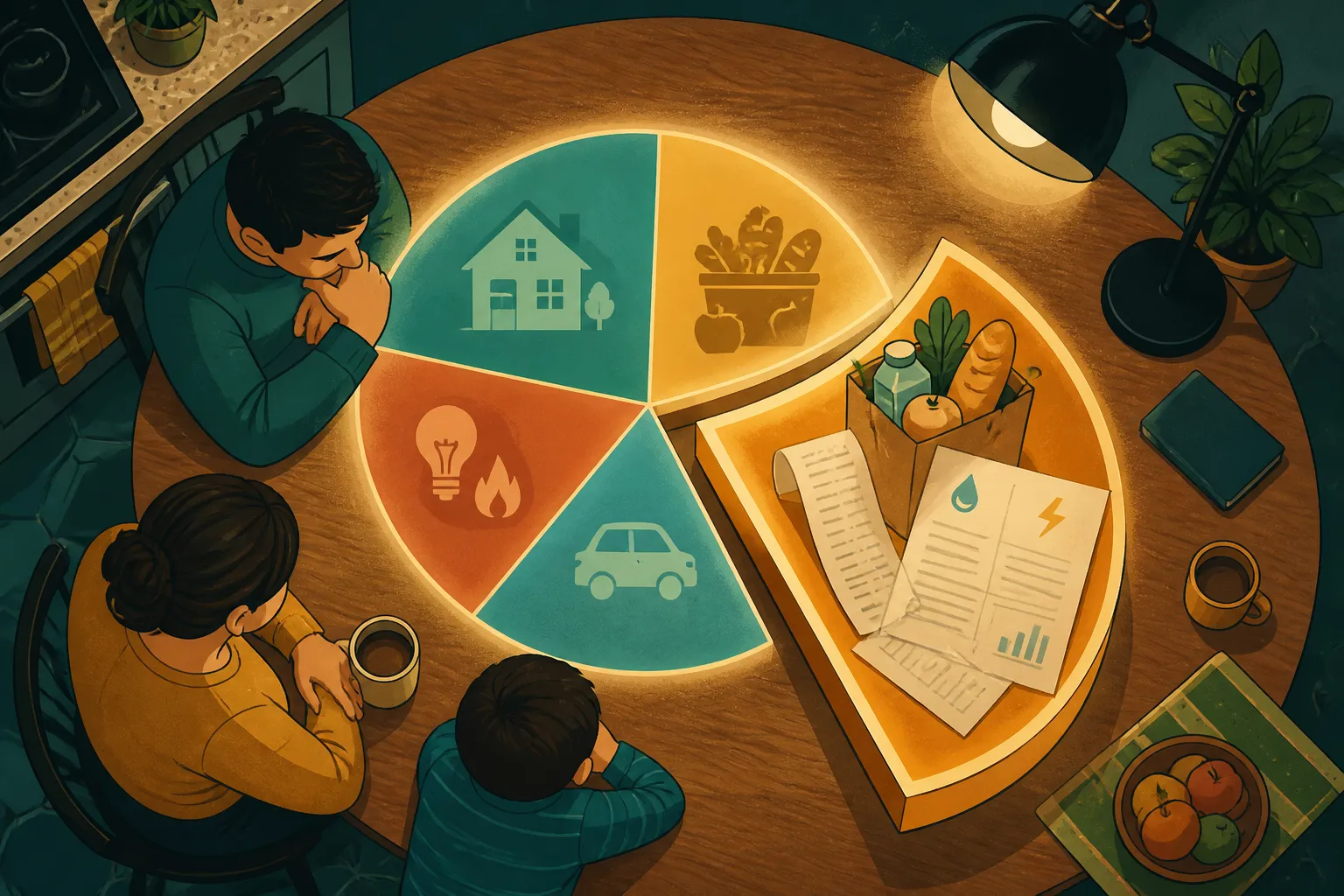

Headline figures about the cost of raising children usually arrive as one tidy number. Real spending does not. It comes in clumps, and it reacts unevenly when prices rise.
How the headline estimate is built
One widely cited benchmark is a 2022 Brookings Institution estimate, as reported by CBS News. It put the cost of raising a child from birth through age 17 at about $310,000. Researchers did not survey parents about their latest receipts. They took the USDA's 2015 child-cost estimate and adjusted it upward for inflation since then.
That method matters. A model built from an older base year depends on the price index it uses and on how inflation is compounded. The sources here do not say which index was applied, or how the total breaks down by category. So the $310,000 is best read as a projection, not a bill. The same analysis found that faster inflation since 2020 added about $26,000 to the total. Household habits did not need to change for the number to jump.
The estimate also stops at age 17. College costs are not included. Anyone planning for tuition or help after high school needs a separate calculation.
Why spending looks different at each stage
The Bureau of Labor Statistics Consumer Expenditure Surveys group families by the age of their oldest child. The FRED series built from that survey covers married couples whose oldest child is under six. Their average annual spending was $77,300 in 2020. It then rose to $87,996 in 2021, $94,506 in 2022, $101,399 in 2023 and $105,709 in 2024.
Those numbers describe the whole household. They include rent or mortgage, vehicles, taxes, groceries and adult needs. They do not isolate what one baby costs. They do show how much a young family's total budget grew over four years of rising prices.
Inflation also hits categories differently. The sources say child care, housing and food have not moved in step, and some child costs have risen faster than general prices. A family with a toddler may feel child care most. A family with a middle schooler may feel groceries, activities and gear. The sources do not give an age-by-age split, so a parent cannot tell from the headline how much of $310,000 belongs to a three-year-old versus a fourteen-year-old.

Child care and housing as pressure points
Brookings, in a piece on child care affordability, says child care costs are rising faster than inflation. It also notes that some estimates have families paying more for child care than for a college degree. Those comparisons vary by place and by the years of care counted, so treat them as a warning and not a rule.
Supply adds pressure. Child Care Aware of America reports that the child care system made little progress in 2025. Supply did not keep pace with family needs, and prices were out of reach for many families. When slots are scarce, prices have room to climb.
CBS reported that Brookings scholar Isabel Sawhill said that when children are planned, parents must either work harder or consume less in another area. That is a blunt way to describe a budget squeeze.
Place matters too. An Institute for Family Studies commentary cites the USDA as finding that urban parents spend 27 percent more per child than rural parents, mainly on housing and food. We could not check that figure against a USDA source, so treat it as secondhand. The broader point still holds. A national average blends expensive cities with cheaper towns and may fit neither.
How to read cost estimates critically
The same commentary questions a graphic that cited $4,314 a month. Its author doubts the child care and housing assumptions, and says averages can be pulled up by spending many families see as necessary. That is one writer's view, not a correction of the data. It is still a good reminder to ask what is inside a number.
Before applying any child-cost figure to your own plans, ask a few plain questions:
- Does the estimate include college, or stop at age 17?
- Which base year does it use, and was it adjusted with general inflation?
- Does it cover one child's extra costs, or a whole household's spending?
- Do its housing and child care assumptions match my region?
Then do the local work. Look up child care rates in your area and set them against your household income. A state child care office or a local child care resource and referral agency may publish rates, though the sources here do not cover that or any assistance programs, so check directly. Add your own rent or mortgage, and decide early whether college belongs in the plan. A rough local budget will tell you more than a national total.