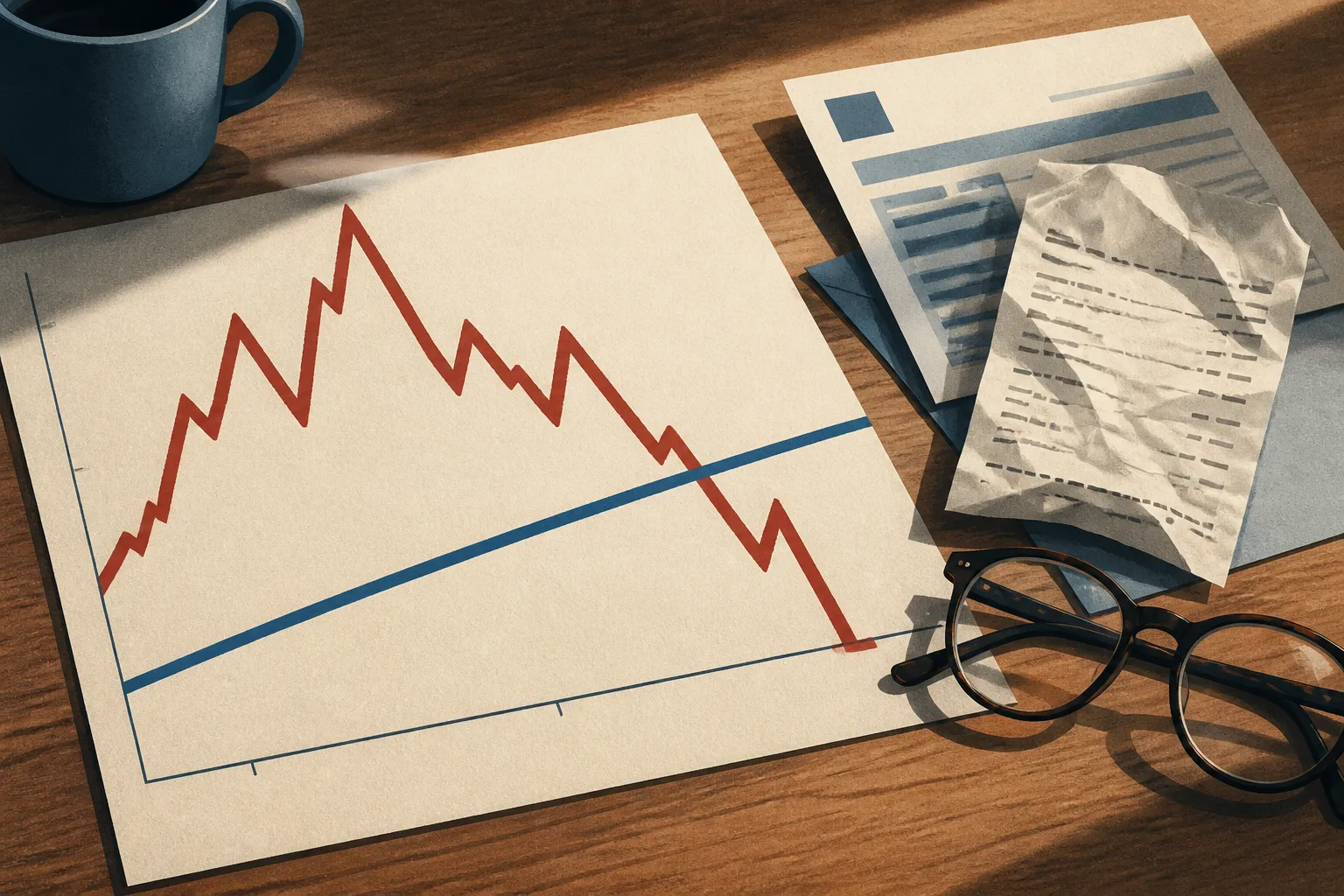











Your paycheck shows a nominal wage. That is the plain dollar amount your employer pays you. It says nothing about what those dollars buy. Real pay fixes that by adjusting the dollars for prices. It tells you whether your pay can buy more, the same, or less than it did a year ago.

A raise feels good. A raise that trails prices does not help much at the checkout. That gap is the whole reason economists bother with the distinction.
Nominal pay and real pay, defined
Nominal pay is the dollar figure with no adjustment. Real pay is that figure adjusted for inflation, so it reflects purchasing power. The Bureau of Labor Statistics publishes a monthly Real Earnings Summary that does this for American workers. The BLS also explains how its income and price data are used side by side in its CPI and income factsheet.
Nominal pay is what lands in your bank account. Real pay is what you feel at the grocery store or the gas pump.
A worked example
The rough math is simple. Take the percent change in your pay and subtract the percent change in prices. The result is the approximate change in real pay.
- Your pay rises 4 percent over the year.
- Prices rise 5 percent over the same year.
- 4 minus 5 leaves about negative 1 percent.
You earn more dollars, but you can buy about 1 percent less. For a more exact answer, divide your new pay by a price index and compare it with the old pay divided by the old index. The two methods land close together when changes are small. The sources I reviewed do not walk through that second method step by step, so treat this as a simple illustration, not an official procedure.
Say you earned $1,000 a week and now earn $1,040. A basket of groceries that cost $100 now costs $105. Your raise bought you a smaller basket.
Why the answer depends on how you measure it
Whether pay has kept up with inflation is not one fixed fact. A Brookings analysis, Has pay kept up with inflation?, shows that the choice of pay measure, price measure, and time period can reverse the conclusion. Start the clock before a price surge and pay can look like it fell behind. Start it after and the story can flip.
The BLS looked at this problem directly in a piece asking whether the pandemic affected real earnings. It compared average hourly earnings with inflation before and after the pandemic began. The point for readers is the method. The comparison window matters as much as the data.
Group matters too. The sources point to sector and demographic differences, so a figure for all workers may not describe your industry. Check which group a number covers before you apply it to your own situation.
Common wage measures and what they show
Different institutions track pay in different ways. The Atlanta Fed's Wage Growth Tracker follows the same individuals twelve months apart. It reports the median percent change in their hourly wages, using Current Population Survey data. Its latest reading was 3.9 percent, a three-month overall unweighted figure for September 2026, updated October 8, 2026.
That is a nominal number. It does not subtract inflation. To judge real pay, you need a price measure for the same period, and the latest BLS Real Earnings Summary is the place to look.
There is also a caveat. The tracker's sample was 10 percent lower in November and December 2025 than in September 2025, which widens the confidence intervals. Small monthly moves should not be read as trends.
Other reports average pay across all jobs in a single month. Those are different measures and they are not interchangeable. The BLS guide to index numbers and percent changes helps with reading them.
Pay measure, price index, and time period can each change the answer.
Questions to ask before accepting a claim about pay
When a headline says wages have or have not kept up, ask three things.
- Which pay measure and which inflation measure were used?
- What period was compared, and did it start before or after a big price jump?
- Does the figure cover all workers, one sector, or one group?
A claim that names none of these is a red flag. The Brookings work shows these choices can flip the result.
One Atlanta Fed paper on the 2021 to 2024 inflation surge linked falling real wages to more job-to-job moves, as workers tried to win back lost purchasing power. Real pay is not just a statistic. It can change what people do.