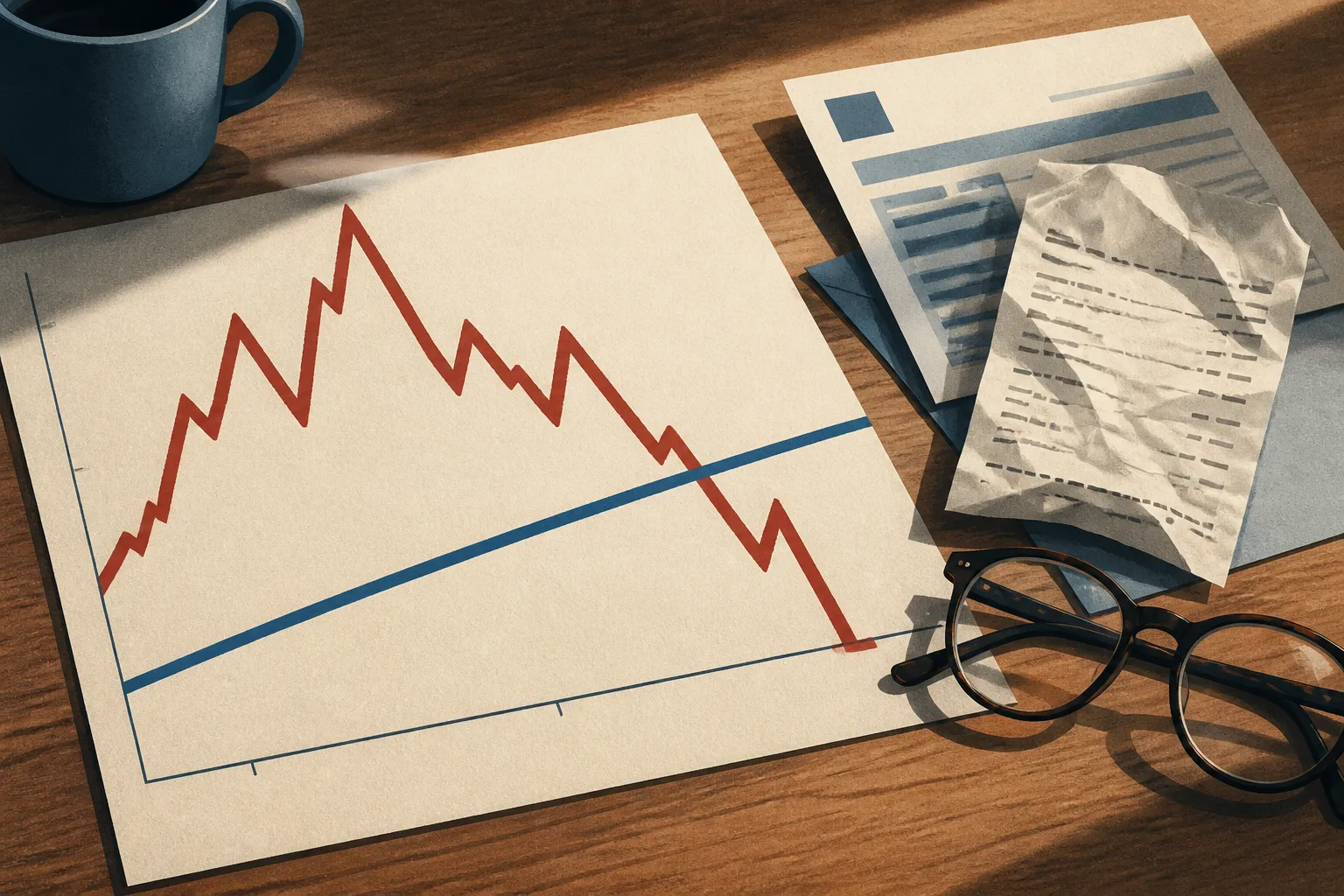

A bank statement shows numbers that move in only one direction when interest arrives: upward. Yet looking strictly at an account balance can obscure what is happening to the actual purchasing power of those funds. When consumer prices increase across the broader economy, the true value of saved cash shifts quietly in the background.

What inflation does to the value of a dollar
In economic analysis, inflation is defined as a general, sustained upward movement in the prices of goods and services across the economy. It is not an isolated spike in the cost of a single commodity. When the price of gasoline surges due to a temporary refinery shutdown, or an unseasonable freeze drives up the cost of citrus fruit, that event alone does not constitute inflation. Inflation reflects a broad-based decline in the purchasing power of money over time.
When the inflation rate climbs, each individual dollar buys fewer everyday items, from groceries to utility services, than it did during earlier periods. For households that maintain balances in cash-equivalent vehicles such as basic savings accounts, this dynamic poses a direct challenge. The account ledger may show that not a single dollar has disappeared, but the goods and services those dollars can secure have dwindled. Price stability is treated as a core responsibility of the Federal Reserve System precisely because persistent, unpredictable increases in broad prices disrupt basic household planning.
Nominal interest versus real interest
Evaluating a deposit account requires distinguishing between two distinct measurements: the nominal interest rate and the real interest rate. The nominal interest rate is the stated percentage that a depository institution agrees to pay on the deposited balance over a given timeframe. It reveals how many additional dollars the account will accumulate on paper. It does not, however, indicate whether those additional dollars will expand, maintain, or lose buying power once introduced to the open market.
The real interest rate adjusts the nominal figure to account for changes in the overall price level. Educational materials produced by Federal Reserve Education emphasize that the real rate provides the meaningful measure of what a saver actually earns. If the nominal interest rate on a deposit sits below the broader rate of price growth, the saver experiences a negative real return. The balance grows in nominal terms, but its capacity to purchase real goods contracts. While federal educational resources outline this core distinction, they intentionally omit fixed formulas or static arithmetic examples in general overviews, prompting consumers to examine official price indices when assessing conditions.
The bucket model: interest in, inflation out
To help households visualize this relationship without getting lost in technical jargon, economic educators often employ a bucket model. In this framework, the savings account is conceptualized as an open vessel designed to hold purchasing power. Interest payments function as a steady drip from a faucet into the top of the bucket, adding volume to the reserve. At the same time, inflation acts as an intentional leak near the base, steadily siphoning purchasing power out into the surrounding environment.
Whether the total volume of purchasing power in the bucket expands or contracts depends entirely on the relative speed of the two flows. When the inflow from interest exceeds the drainage caused by price increases, the bucket gains real value. When the outflow from inflation outpaces the drip of interest, the water level recedes even though the faucet continues to run. While this model simplifies complex market dynamics and does not account for compounding schedules or tax considerations, it clarifies why nominal growth alone is insufficient to guarantee financial progress.
Unexpected inflation and household income
The timing and predictability of price changes introduce further complications for household budgets. As outlined in a ten-minute educational presentation from Federal Reserve Education, unexpected inflation affects market participants in asymmetrical ways. In formal lending arrangements, sudden and unanticipated price spikes alter the balance between borrowers and lenders. When inflation outpaces expectations, borrowers repay existing fixed obligations using dollars that carry less purchasing power than anticipated, while lenders receive returns worth less in real terms than originally projected.
A similar friction emerges between wage earnings and daily expenses. If household income fails to rise at the same pace as general prices, cash flow comes under strain. Even if an emergency savings reserve generates steady nominal interest, the household may find itself drawing down principal simply to meet fixed monthly obligations. Monitoring whether wages are keeping pace with consumer indices provides an essential complement to tracking basic savings yields.
Questions to ask and where to verify
Rather than relying on promotional rate disclosures alone, account holders benefit from asking targeted, analytical questions about their cash positions. A methodical review starts by establishing the baseline figures and separating nominal figures from inflation-adjusted realities:
- What is the stated nominal interest rate currently applied to the savings balance?
- How does that nominal yield compare to recent federal measures of price inflation?
- Is household take-home income keeping pace with shifts in general living expenses?
- Is the underlying cash reserve held primarily for immediate liquidity or long-term growth?
Educational materials from federal central banking sources provide conceptual frameworks, but they do not compare specific consumer banking products, list red flags, or provide real-time rate tables. For deeper exploration of how statistical agencies track price shifts over multi-year periods, readers can consult broader research such as the St. Louis Fed's guidance on adjusting for inflation. For questions regarding deposit protection standards, account structure rules, and formal consumer complaint mechanisms, public resources provided by federal regulators, including the Federal Deposit Insurance Corporation and the Consumer Financial Protection Bureau, offer authoritative administrative guidance.
Please seek a professional. This article is general information, not financial, tax or insurance advice. Please seek a licensed financial, tax or insurance professional about your own situation.