











Getting a dispute result back that says nothing changed can feel like hitting a wall. The bureau reviewed your claim, and the error is still sitting on your report. That result is frustrating, but it is not necessarily final. The Fair Credit Reporting Act gives you several options after a dispute comes back unresolved, and knowing the sequence matters because some steps have deadlines attached to them.
A dispute result that leaves information unchanged is not automatically a legal violation, but it does mean you have further moves available under federal law. The key is knowing which move fits where you are in the process.
Understand what a rejected or unchanged result actually means
Under the Fair Credit Reporting Act, a credit reporting company such as Experian, Equifax, or TransUnion must investigate a dispute once you notify it of an error. The main exception is if the bureau decides the dispute is "frivolous," a term the law uses but does not define in plain detail. If your dispute comes back labeled frivolous or irrelevant, read the written response carefully to see the reason given. Sometimes the fix is straightforward: resend the dispute with clearer documentation or a more specific explanation of what is wrong and why.
An unchanged result is not proof that the bureau broke the law. It may mean the bureau investigated, spoke with the furnisher (the company that supplied the data, such as a lender or collection agency), and decided the original information was accurate. That conclusion could be wrong, and you can challenge it, but the process for doing so is different from filing the initial dispute. The next section explains where to start.
Check whether you disputed with the bureau or only the furnisher
This distinction matters more than most people realize. The right to request that a statement of dispute be added to your file, which lets you put your side of the story on record, applies only when you submitted the dispute directly to the credit reporting company. If you wrote only to the lender or collection agency and not to the bureau, that statement right does not apply yet.
If you sent your dispute only to the furnisher, the logical next step is to send a written dispute to each bureau that shows the error. According to the CFPB, fixing a credit report error generally involves contacting both the credit reporting company and the company that supplied the information. Doing both is the standard approach.
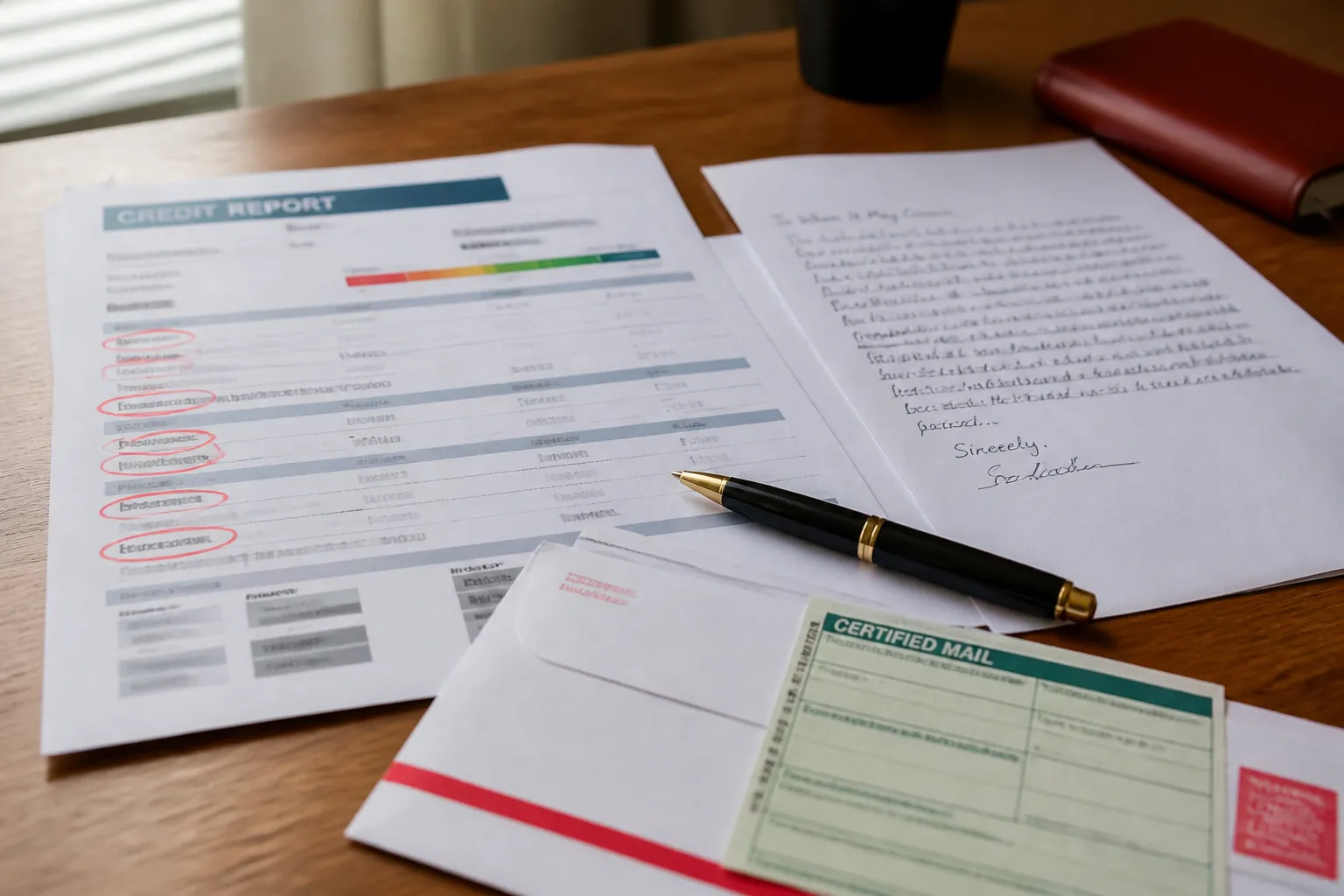
When you write to the bureau, include your full name, address, and phone number; the report confirmation number if you have one; each error with its account number; a clear explanation of what is wrong; a request for removal or correction; a copy of the section of the report with the disputed items circled or highlighted; and copies, not originals, of any supporting documents. Send the letter by certified mail with a return receipt so you have a record of delivery. Keep everything.
Use a statement of dispute and know your legal rights
If the bureau does not respond or does not respond adequately after you have submitted a written dispute directly to it, you can ask the bureau to include a brief statement of the unresolved dispute in your file and in future reports. The CFPB explains that this places your explanation on record. It does not by itself remove or change the disputed item, but it does mean anyone pulling your report can see that you contest the information.
The Fair Credit Reporting Act also gives consumers the right to bring a lawsuit against a credit reporting company that violates the law. Time limits apply to these claims. The sources available here do not list those deadlines, so it is worth checking official federal guidance or speaking with a qualified attorney about the specifics of your situation. What the law does say is that a company that willfully fails to comply can be liable for actual or statutory damages, punitive damages, and attorney fees. That is a description of the law, not a forecast for any particular case.
State consumer protection laws may offer additional avenues as well. The sources here do not cover those, and they vary by state, so researching your state's rules or finding free legal help in your area is a separate step worth taking.
Know when and how to file a CFPB complaint
The Consumer Financial Protection Bureau operates a complaint portal for credit reporting issues, but there is a timing requirement. The CFPB's own complaint notice says you should wait more than 45 days after filing a dispute with the bureau before submitting a complaint. The notice advises against filing if the dispute was not filed more than 45 days ago or is no longer pending. Write down the date you sent your dispute so you can track this window.
If that 45-day window has passed and the error is still unresolved, filing a CFPB complaint is one of your next steps. Online submission takes about 7 to 10 minutes. By phone, the process takes about 25 to 30 minutes. The phone line runs from 9 a.m. to 6 p.m. ET, Monday through Friday, except federal holidays.
One thing to know before you submit: the CFPB complaint portal is a shared-data system. The bureau's notices state that complaints are securely shared with other state and federal agencies for supervision, enforcement, and market monitoring. Knowing this in advance helps you decide what details to include and what level of specificity you are comfortable providing.
Advocacy groups have raised concerns about the CFPB's current complaint process. The National Consumer Law Center reported that the bureau added warning notices in February requiring consumers to confirm they filed a dispute first and to wait 45 days. The NCLC argued in formal comments that those notices could deter legitimate complaints and may misstate the law. When you go to file, read the current notice on the CFPB site, since the requirements stated there are the ones in effect at that moment. For context, the NCLC reported the CFPB received more than 5.8 million complaints about credit and consumer reporting companies in 2025, making up roughly 85 percent of all CFPB complaints that year.
Watch for signs that identity theft may be involved
If the item you are disputing is an account you never opened, the problem may not be a simple reporting error. It could be identity theft. The standard dispute process is still a reasonable starting point, but it may not be enough on its own.
IdentityTheft.gov is the federal government's dedicated resource for reporting identity theft and building a recovery plan. It can help you generate documentation to share with bureaus and creditors, which is often more targeted than a general dispute letter when fraud is the underlying cause. If you suspect your information was misused, starting there adds structure to what can otherwise feel like an overwhelming process.
Please seek a professional. This article is general information, not financial, tax or insurance advice. Please seek a licensed financial, tax or insurance professional about your own situation.


