










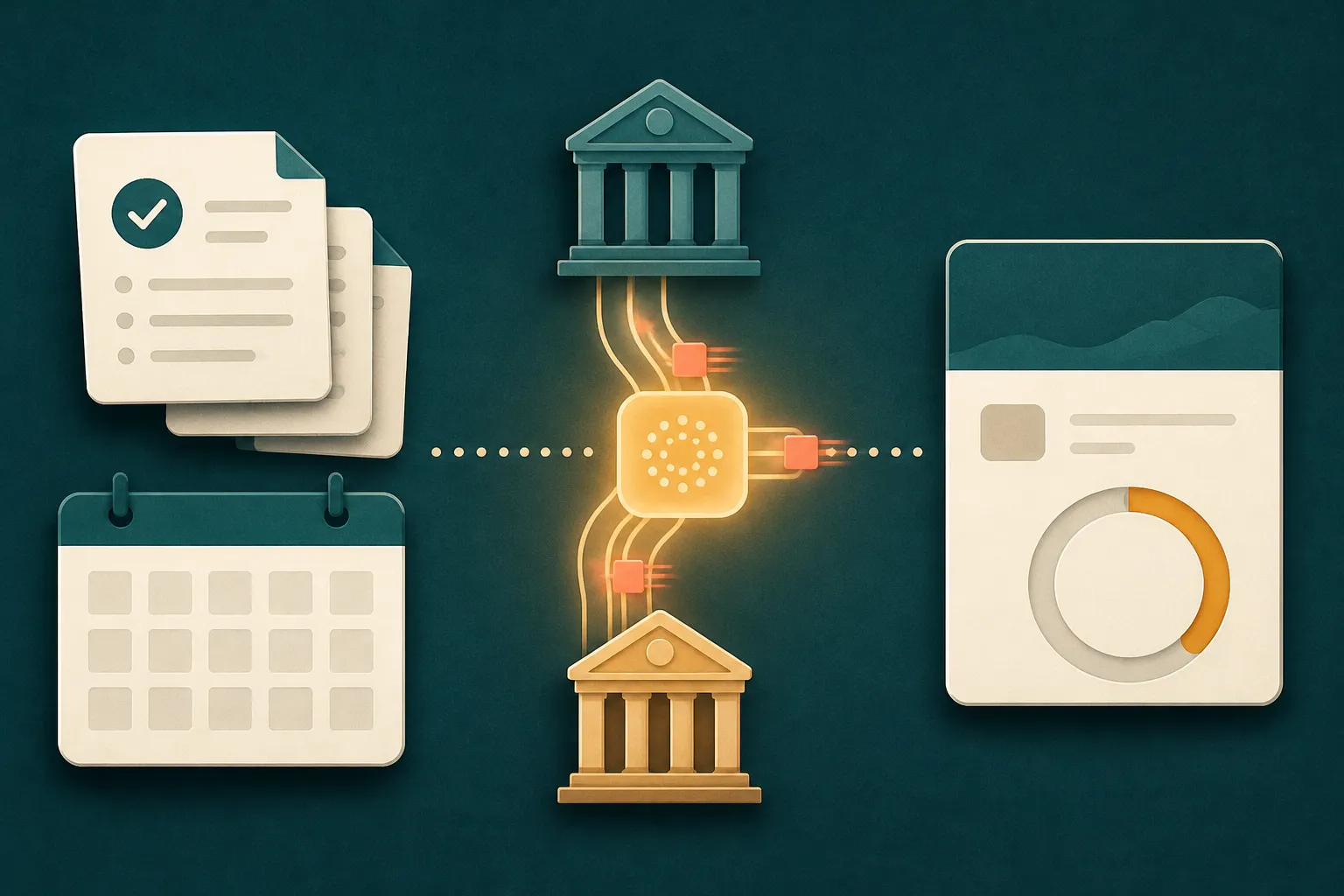
A paycheck can show up before payday. A bill payment can read "pending" while the money still sits in your account. Both may run on ACH, the Automated Clearing House network that moves electronic payments between banks and credit unions. The timing makes sense once you split it into three events: the payment is submitted, it moves through the network, and you can use the money.
- Start with instructions. An employer sends payroll information, or a biller submits a payment you authorized.
- Watch the business day. A payment entered during business hours can clear the same day, but that does not mean it is complete.
- Check the account status. A displayed deposit or debit does not, by itself, show that every step is finished.

- For an incoming deposit, check availability. The date you can withdraw or spend the funds may differ from the date the transfer first appears.
- For a payment you owe, check for a return. An ACH debit can be returned if the account lacks enough money.
What an ACH transfer is
ACH is a way to move money electronically between accounts at banks and credit unions. Direct deposit of wages is a familiar example of money coming in. A monthly debit for a routine bill is an example of money going out. Instead of carrying a paper check between institutions, payment instructions travel through the network.
Account terms can make this sound harder than it is. You may see direct deposit, direct payment, direct debit, EFT, electronic bank transfer, or eCheck on a form. EFT means electronic funds transfer. Read the surrounding terms rather than assuming every label describes the same transaction. For ACH transfers that authorize a financial institution to debit or credit a consumer account, the Electronic Fund Transfer Act and Regulation E apply. The Consumer Financial Protection Bureau explains when those rules apply.
Why a fast-looking transfer can still take days
Some ACH payments can clear on the day they are entered, if that day is a business day and the payment arrives during business hours. That does not mean the transaction is complete that day. Processing takes time, and the network has to guard against fraud and money laundering. The CFPB notes that ACH payments can take days to complete.
So a single promise such as "ACH takes two days" is too neat. The sources reviewed do not give a standard number of days for every type of ACH payment. Timing likely depends on the kind of payment, when it was submitted, and the institutions involved. An account screen that shows a payment right away may be showing an entry before processing is done. If a payment has a deadline, ask when the recipient counts it as paid, not just when it left your screen.
When an ACH deposit becomes available
Banks and credit unions must make electronically deposited funds, including ACH deposits, available by the next business day after they receive them. Available means you can withdraw or use the money. Many institutions make payroll deposits available sooner, sometimes immediately. That early access is a choice by the institution. The CFPB describes the next-business-day requirement as the floor.
Receipt is the detail worth checking. Institutions set cut-off times for deposits. The cut-off can be no earlier than 2 p.m. at a physical location, and no earlier than noon at an ATM or elsewhere. A longer hold is allowed in some cases, such as an account open less than 30 days, or one overdrawn too many times in the last six months. The CFPB's funds-availability explanation covers the rules and exceptions. Ask your institution whether mobile check deposits follow a different timetable, since a check deposit is not the same thing as an ACH payroll deposit.
Returns, fees, and transfer limits
An ACH transaction can be returned for nonpayment if the account does not have enough money. That matters when a bill payment looks settled on one screen but the balance later comes up short. Fees may also apply, depending on your account terms. The useful distinction is between submitting a payment and having the money there when the debit is processed.
Your institution might also limit the amount you can transfer and might charge a fee for each transaction. Neither is universal, so the fee schedule and transfer terms beat any rule of thumb. Some banks offer direct deposit advances that are deducted from your next deposit. These may carry high fees, and that cost is separate from the timing of the deposit itself.
Questions that settle the timing
When a date matters, ask your bank or credit union when it considers the end of the business day for deposits. Ask about its cut-off time and its hold policies. Ask whether it treats mobile check deposits on a different timetable. For transfers out, ask whether there is an amount limit and a fee per transaction.
Those answers turn a vague "pending" into a timeline. The account entry, the end of processing, and access to the money are three points, and your account's terms say which one counts for the payment in front of you.
Please seek a professional. This article is general information, not financial, tax or insurance advice. Please seek a licensed financial, tax or insurance professional about your own situation.


