










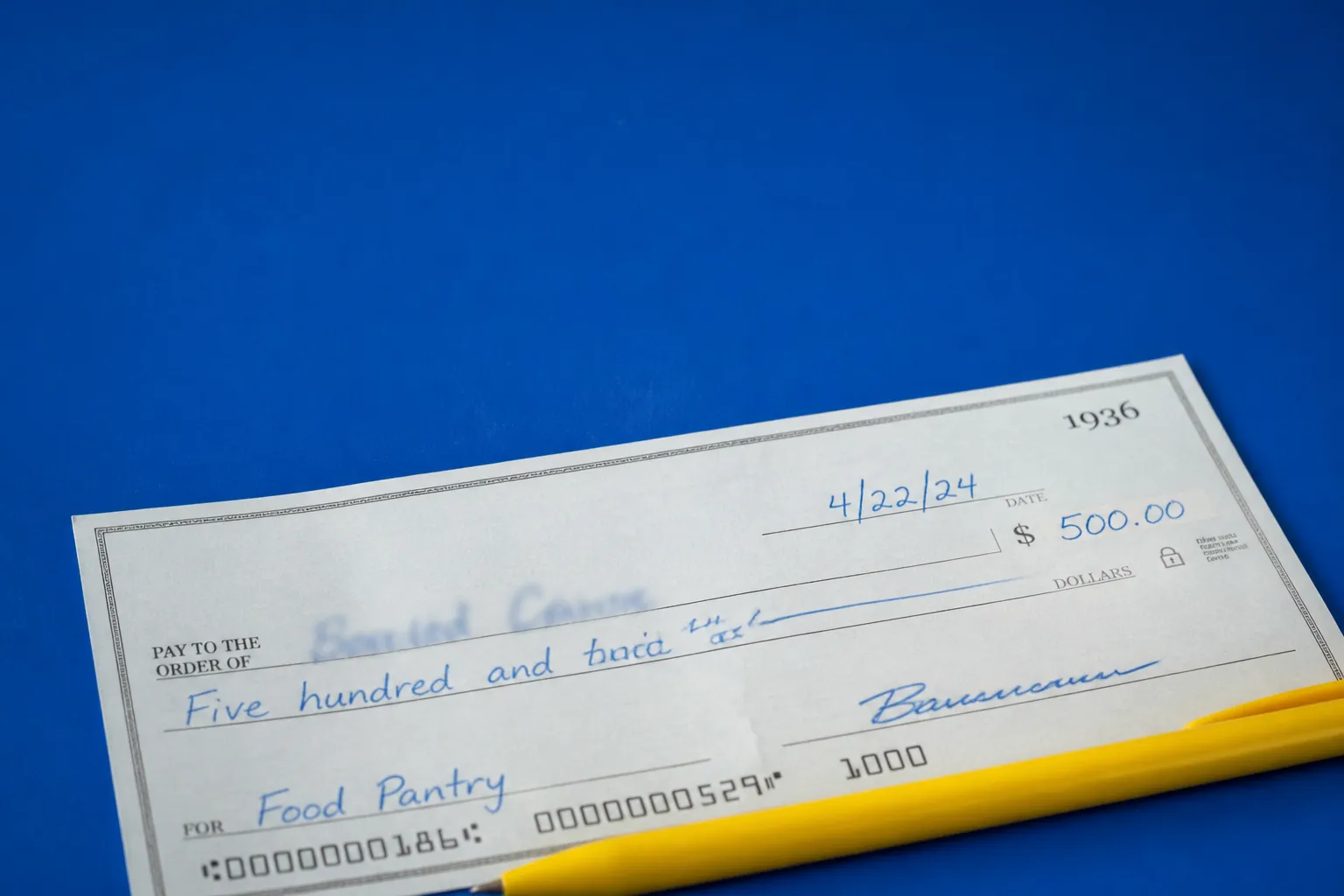
A check addressed to you can raise an unexpected question when you take it to a joint account: whose signature does the bank need? Start with the payee line on the front of the check. The names and the word between them usually matter more than the number of people who own the account.
- Read the payee line exactly as written, including any “and,” “or,” or “and/or.”
- Check that the names match the people who can endorse the check. An endorsement is a signature on the back that allows the check to be deposited or cashed.
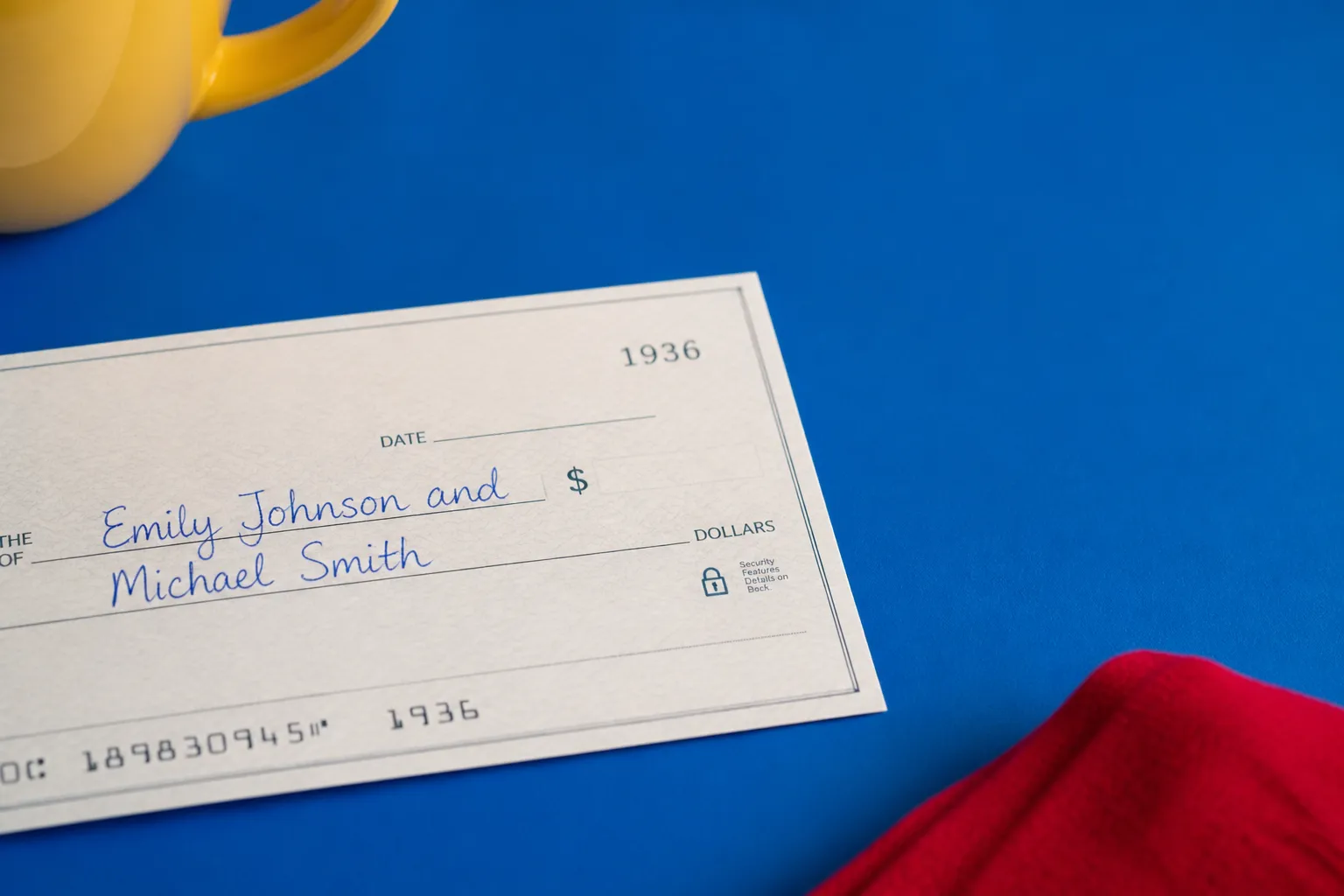
- “And”: Both named payees generally need to endorse the check.
- “Or”: Either named payee can generally endorse it.
- “And/or” or unclear wording: Ask the bank how it handles the check before signing or submitting it.
Why the payee line comes first
The Consumer Financial Protection Bureau explains that the wording on a two-person check determines who must sign. A check payable to “Pat and Chris Doe” generally needs both signatures before it can be cashed or deposited. A check payable to “Pat or Chris Doe” generally needs only one. The same distinction applies to spouses, relatives, or any other pair of named payees.
Do not treat “and/or” as if it automatically means “or.” The wording is less clear, and the bank’s procedures may determine what it will accept. Ask before adding a signature. If a payee’s name is misspelled, asking the person who wrote the check for a replacement may be simpler than finding out at the deposit counter that the bank will not take it.
What a joint account changes, and what it does not
A joint account gives two or more people access to the same account under its terms. It can provide one place for checks given to both account holders, including wedding gifts. But joint ownership does not erase the wording on a check. If a gift check names two people with “and,” putting it into their joint account generally still calls for both endorsements. If it says “or,” one named payee can generally endorse it.
Account names deserve a close look, too. A check written before a surname change may use a different name from the one later shown on the account. A bank may have instructions for handling that mismatch, and the check writer may be able to issue a new check. Ask the bank what it needs rather than assuming the shared account settles the name question.
Acceptance of a deposit and rights to the money are separate questions. The sources here do not establish what each joint owner is entitled to after a check enters the account. The account agreement is the place to check access and ownership terms.
When the depositor is not a payee
A different set of questions comes up when a check is payable to someone who is not an owner of the account receiving it. A third-party check generally involves a depositor who is neither the person who wrote the check nor the person it is payable to. Banks set their own policies for accepting these checks and are not required to accept them, according to federal banking guidance.
The named payee’s endorsement is generally needed to transfer the check. The bank may also ask for identification, a form, or permission from the account holder. Those requirements vary, so a successful deposit at one bank does not establish what another will do. Read the rest of the check before attempting a transfer: wording such as “For deposit into beneficiary’s account” or “Non-negotiable” can restrict ordinary endorsement. If the amount written in words differs from the numeric amount, ask the check writer to correct the problem rather than guessing which amount the bank will use.
Ask about acceptance and timing separately
Before choosing a mobile, ATM, or in-person deposit, ask which methods the bank allows for a two-payee check. An in-person visit may make it easier to ask about an unusual payee line, but it does not change the signature rule. For a check payable to someone else, ask specifically whether the bank accepts third-party checks and what documents it requires.
Check the issue date as well. A personal check more than six months old may be treated as stale, though a bank may still decide to honor it. Depositing sooner avoids making age another reason the bank might decline the check. Acceptance is also different from immediate access to the funds: ask the bank when the deposit would be available under its hold schedule.
The useful question is precise: “This check says ‘Pat and Chris Doe,’ and the deposit account is joint. Do you need both signatures, and can I use this deposit method?” That gives the bank the wording, the account type, and the proposed next step without asking it to guess.
Please seek a professional. This article is general information, not financial, tax or insurance advice. Please seek a licensed financial, tax or insurance professional about your own situation.


