











A rent increase notice can change more than one line in a budget. To see the impact, check the new amount and effective date, calculate what rent will take from your take-home pay, and look for local help early if the numbers do not work. The notice itself does not explain which local rules apply, so treat it as a document to review, not a complete guide to your rights.
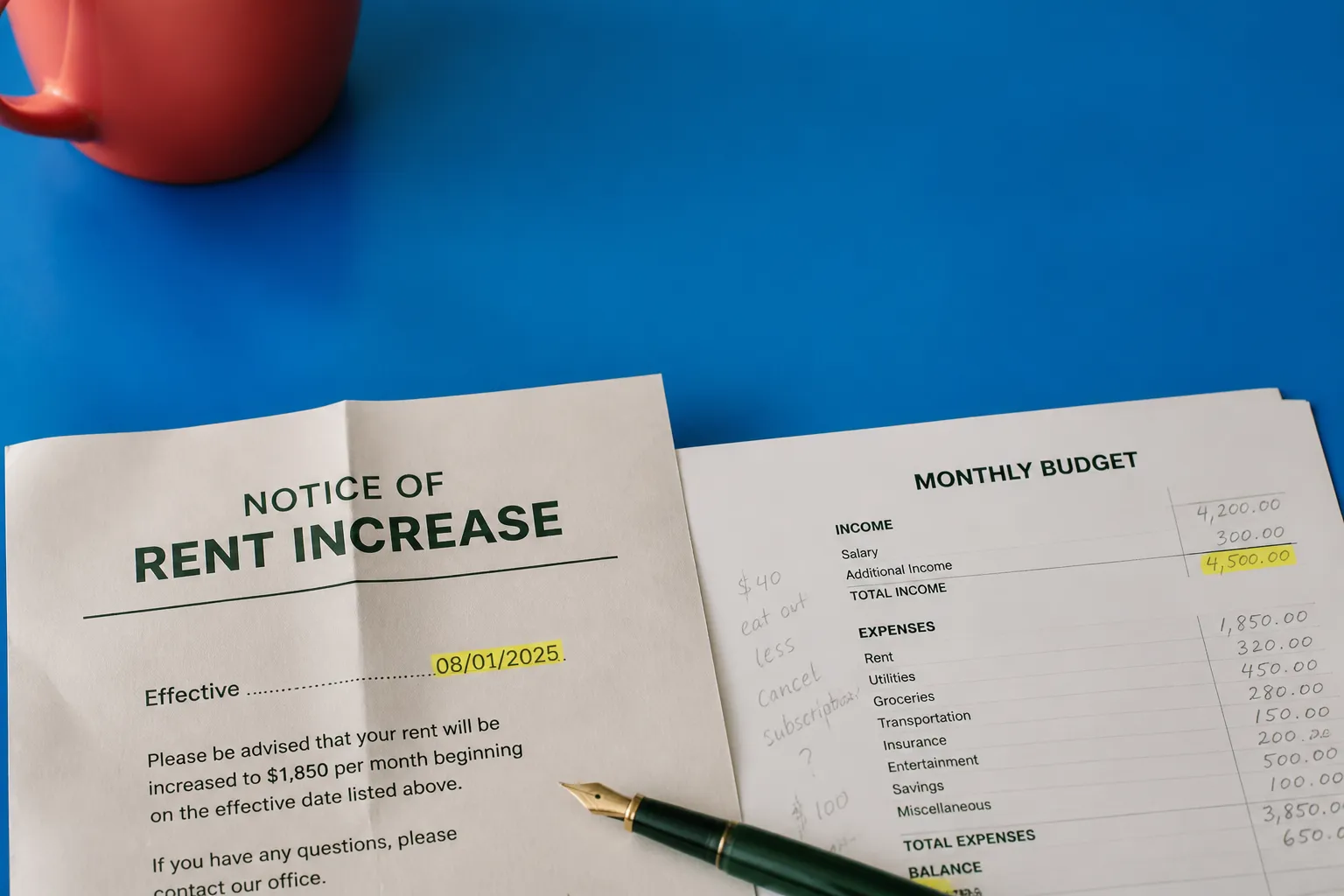
Start by locating the new rent, the date it begins, and any conditions or other changes mentioned in the notice. Compare those details with your lease and keep a copy of both documents. Note any change to utility responsibilities or other recurring charges, then check the relevant lease language and bills rather than assuming those costs will stay the same.
The available sources do not establish what wording a notice must contain or how much advance notice is required. Those rules can depend on where the home is. If the notice is unclear, write down the questions you need answered and check with a local tenant resource, housing agency, or legal aid organization before relying on a general guide.
Next, translate the new rent into a monthly number you can plan around. For example, an increase from $1,400 to $1,500 adds $100 each month, or $1,200 over a year. That yearly total can help show the size of the change, but your immediate budget needs to account for the extra $100 in each month after the increase takes effect.
Calculate how much of take-home pay goes to rent
Take-home pay is the money that reaches your bank account after taxes and other payroll deductions. To calculate your rent-to-income ratio, divide monthly rent by monthly take-home pay, then multiply by 100. With $1,400 rent and $3,200 in monthly take-home pay, the calculation is $1,400 divided by $3,200, or about 44%.
Repeat the calculation with the new rent. At $1,500 against the same $3,200 take-home pay, rent would be about 47%. The ratio does not show every bill or household need, but it makes the change easier to compare. Also look at dollars left after rent: in this example, that amount falls from $1,800 to $1,700 before other expenses are paid.
A common rule of thumb says rent should be no more than 30% of income, but many people in high-rent areas find that figure difficult to reach. One budgeting article offers informal ranges, describing 35% to 40% as high but potentially manageable with adjustments, 45% to 50% as a range where a household may feel stretched, and 50% or more as serious strain. These are not official standards or a prediction of what will happen in a particular household. Use them as prompts to inspect the rest of the budget, not as a pass-or-fail test.
Build the new rent into a workable monthly plan
Write down the expenses that must be paid each month, then separate those from costs that can vary. Fixed obligations such as insurance, loan payments, or phone service may be difficult to change quickly. Flexible spending, including takeout, subscriptions, or shopping, may offer more room. Choose one or two categories to review and estimate the actual savings before counting them against the higher rent.
Transportation and utilities can also affect the gap. Check recent bills and commuting costs to see whether there is a realistic way to reduce either one. Review the lease for any change in who pays utilities, and compare the notice with the lease renewal terms. A possible saving is useful only if it applies to your household and begins in time to cover the higher rent.
Some budgeting articles suggest keeping a small cash buffer, with one source naming $250 to $500 as an example during high-rent periods. That is a suggestion, not a universal target. The amount a household can set aside depends on its income, bills, and other obligations. If the budget is already short, do not treat that figure as a requirement.
You can also ask whether the landlord would consider a longer lease at a different rate or a referral credit. These are negotiation ideas, not rights established by the sources reviewed, and a landlord may decline. Do not include a possible discount in your budget unless it is agreed to, and keep any agreement in writing.
Look for rent and utility help before a payment is due
If the higher amount may make a payment difficult, start asking about assistance as soon as possible. The Consumer Financial Protection Bureau’s renter resource points people toward state, tribal, and local organizations that distribute help with rent and other bills. Start with local government offices, a library or cultural center, or a search for assistance in your town, county, state, or tribal nation.
Calling 211 can help identify rent and utility resources, and the number can be reached from a cell phone or landline. Ask each organization what it covers, what documents are needed, and how long a decision and payment may take. Assistance can take several weeks to arrive after an application, so asking early can help you understand whether there may be a timing gap.
For utility bills, the Low Income Home Energy Assistance Program, or LIHEAP, offers year-round help through local offices. The National Energy Assistance Referral Hotline is (866) 674-6327. Program availability and eligibility details are local, so confirm them with the relevant office rather than assuming that a program will cover a particular bill.
A HUD-certified housing counselor can discuss options if rent or mortgage payments are becoming difficult. The CFPB’s housing insecurity resource describes ways to find housing help. Ask whether a counselor is HUD-certified and whether any service charges an up-front fee. The CFPB says legitimate housing resources do not charge an up-front fee. If someone asks for one, pause and verify the organization through a government or local source.
Check local rules and get specific help with the notice
The budget steps above cannot determine whether a rent increase is permitted or whether the notice arrived with enough time. State and local rules may set limits or notice requirements, and the sources reviewed here do not explain those rules. Check your state attorney general, state housing agency, or a local tenant organization for information that applies to your address. A local bar association or legal aid organization may help if you need a legal opinion about your notice or lease.
Keep a simple record: the notice, your lease, the date you received the notice, the new amount and effective date, and any questions or responses. Then update the budget using the new rent and the expenses you can verify. If the numbers show a shortfall, contact local assistance resources early and ask about timing. Eligibility rules and payment timelines vary, so confirm them directly rather than counting on funds before they are approved.
A clear plan starts with two figures: the new monthly rent and the amount left after it is paid. From there, check the notice against your lease, identify realistic budget changes, and get local guidance on rules and assistance. That gives you a more reliable picture than the percentage alone.
Please seek a professional. This article is general information, not financial, tax or insurance advice. Please seek a licensed financial, tax or insurance professional about your own situation.


