











You get married, or you move across town. The card in your wallet still shows the old name or the old street. Does anything break? The short answer is that the sources I checked leave some of this open. What they do show is how your name and address travel through official records, and how to check your credit report afterward. Let's walk through it one step at a time.
Why a name or address change can reach your credit file
A credit report is a record of your accounts and payment history. Credit reporting companies, often called bureaus, match that record to you using identifying details. Your name, address, and phone number are part of that match. When those details change, the file may lag behind. A new name or address does not always update everywhere on its own.
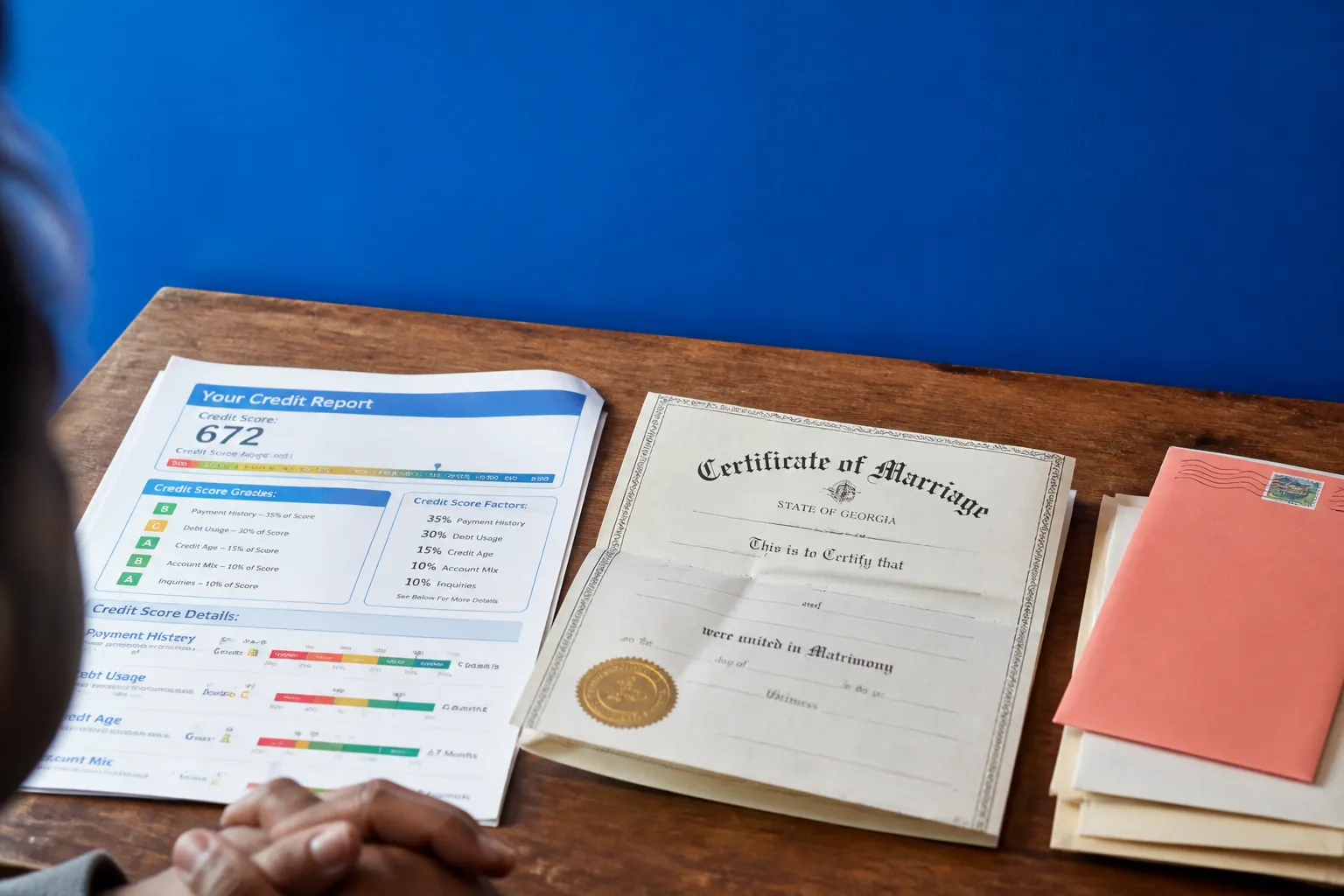
A name change can come from marriage, divorce, or a court order. The process can vary between states. USAGov advises keeping certified copies of the papers that prove the change. A certified copy is an official copy issued by the agency that holds the original. Marriage or divorce certificates and name change orders are the usual examples.
Notifying government agencies first
Start with the Social Security Administration (SSA). USAGov says other agencies learn of name changes through SSA records. Telling the SSA early lowers the chance that your records stay out of step elsewhere.
One related rule is worth knowing. Every name on your tax return must match SSA records. That is a government-records issue, not a credit report issue. Still, it shows how one name change touches several official files, not just your credit file.
Checking your credit report for identity errors
After a change, read the identity section of your credit report. The Consumer Financial Protection Bureau (CFPB) lists common mistakes there. These include a wrong name, phone number, or address. They also include a mixed file, which is when another person's accounts are combined with yours.
Then look at the accounts themselves. The CFPB says to watch for these:
- Closed accounts shown as open.
- You listed as the owner of an account when you are only an authorized user.
- Incorrect balances or credit limits.
- The same debt listed more than once.
Accounts you never opened, or accounts that belong to someone with a similar name, can signal identity theft. The CFPB points to IdentityTheft.gov for reporting that.
How to dispute an error
You have the right to dispute information you believe is wrong. Fixing an error generally means contacting two parties. One is the credit reporting company that issued the report. The other is the furnisher, which is the lender or company that supplied the information.
The CFPB suggests putting a dispute in writing. Say plainly what is wrong and why. Include these items:
- Your full name, address, and phone number.
- The report confirmation number, if you have one.
- Each disputed item, with its account number.
- A request that the item be removed or corrected.
- Copies of supporting documents, never originals, plus a highlighted copy of the disputed part of the report.
Certified mail with a return receipt gives you a record that the letter arrived. The sources I reviewed do not say how long a dispute takes or what happens if a bureau does not resolve it. Check the CFPB and the bureau's own pages for current procedures.
Updating your card billing address and what the sources leave open
A billing address change on a card account is a separate step from a credit report update. Bankrate has a guide on checking and changing a billing address. The text I could use did not include the steps, so your card issuer's own instructions are the safest guide.
Experian and Equifax each have pages on updating personal information, removing an incorrect address, and changing a legal name. The text available was mostly site navigation. I cannot confirm their steps or any fees. The sources also do not say how a name change affects existing card accounts, scores, or reporting history. They give no dollar amounts either.
So here is a plain checklist. Notify the SSA first. Keep certified copies. Read your credit report for wrong names, addresses, and accounts. Dispute what is wrong with both the bureau and the furnisher. Then ask your card issuer how it wants to receive the change. This is general education, not advice for your situation.
Please seek a professional. This article is general information, not financial, tax or insurance advice. Please seek a licensed financial, tax or insurance professional about your own situation.


