










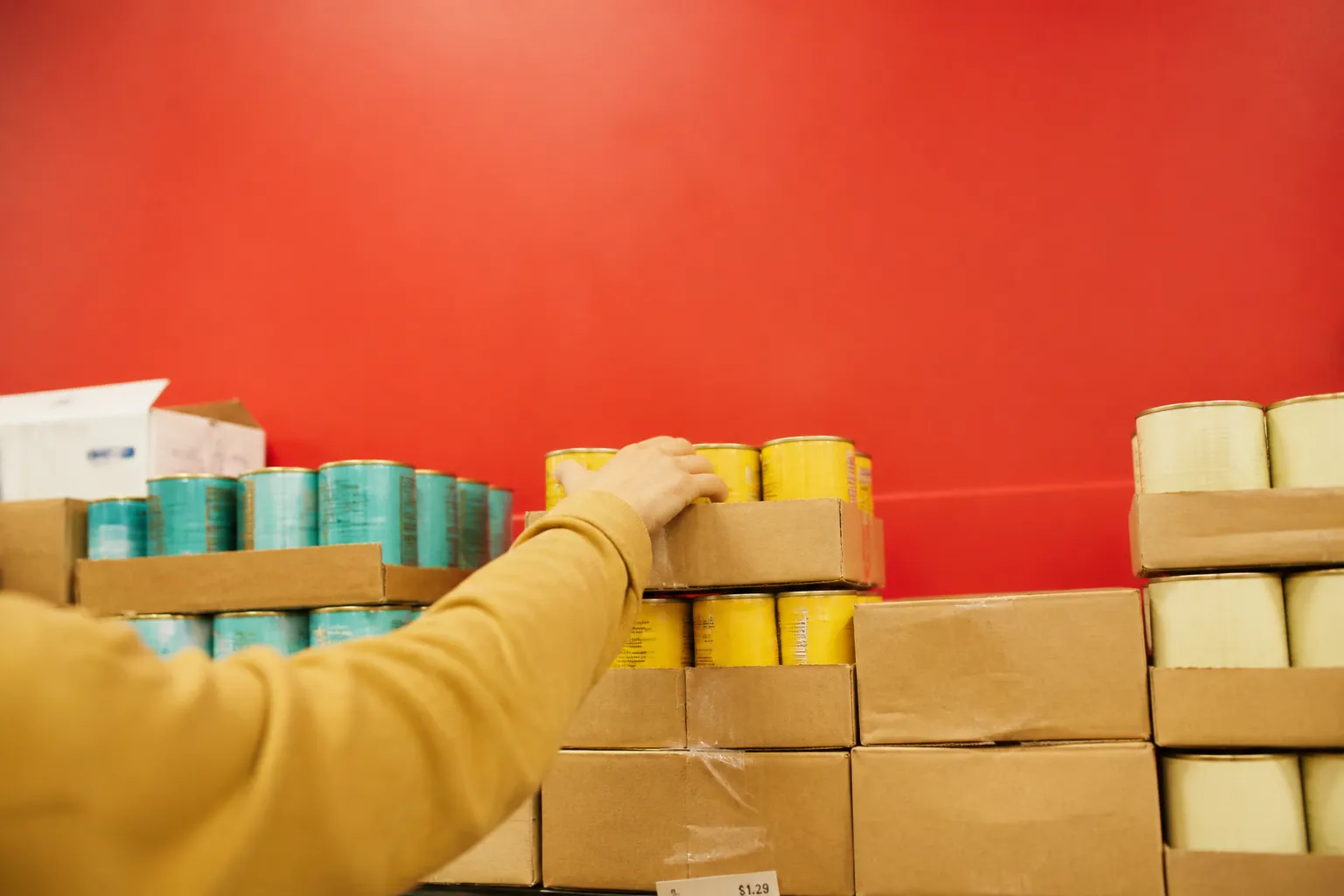
You are standing in the grocery aisle, comparing two familiar packages. The shelf price looks unchanged, and the container looks close enough to the one you bought last week. But the amount inside may have changed. A quick look at the net contents and the unit price can help you spot that difference without relying on package shape or memory alone.

What shrinkflation means at the shelf
Shrinkflation describes a product that contains less than before while its price stays the same or goes up. For example, a container of ice cream that once held 16 fluid ounces might be sold in a 14-fluid-ounce size at the same price. The container can still look familiar, so the change is easy to miss if you check only the large price printed on the shelf tag. The U.S. Government Accountability Office has examined shrinking product sizes as a consumer price issue.
The practical change is in how much each dollar buys. If a product costs $4 and contains 16 ounces, it costs 25 cents per ounce. At the same $4 price, a 14-ounce package costs about 29 cents per ounce. That is roughly a 14 percent increase in the per-ounce cost, even though the shelf price did not change. This is an arithmetic example, not a claim about how often shrinkflation occurs.
Start by reading the package’s net contents, the stated amount inside, rather than judging by its height, width, or overall shape. If you buy an item often, you may remember its old size, but memory can be imprecise. The current label gives you a number to compare with an earlier package, receipt, or note if you have one.
How unit pricing makes the comparison easier
A unit price gives the cost for a standard amount, such as one ounce, one gram, or one liter. It lets you compare products that come in different package sizes using the same measure. The shelf tag often shows the product, package size, total price, and price per unit, though the exact format can vary. NIST describes unit pricing as a tool for comparing value across products and sizes.
For a simple comparison, keep the product and unit of measure consistent. If two packages of the same kind of food list a price per ounce, compare those figures. The larger package may have a higher total price but a lower price per ounce. A smaller package may cost less at checkout but more for each ounce. Neither total price tells the whole story by itself.
Unit pricing can also help when the product’s package changes. If the shelf price stays put but the amount falls, the cost per unit should rise. The unit price gives you a way to see that change at a glance, provided the tag is accurate and uses a measure that makes sense for the product.
A quick aisle check, step by step
Imagine you are buying a product you keep in the pantry. One package costs $3.60 for 12 ounces, and another costs $4.20 for 16 ounces. Dividing price by amount gives 30 cents per ounce for the first package and about 26 cents per ounce for the second. The second package costs more at checkout, but less per ounce. This comparison is useful when the products are otherwise comparable to you.
For a familiar product, the check can be even shorter. Read the net contents, compare the unit price with another size or an older package, and look at the total price. If the posted unit price seems surprising, you can do the division yourself: total price divided by the amount in the package. The result should be close to the listed unit price, allowing for rounding or differences in how the shelf tag displays it. The available sources do not specify a single rounding format for every store.
- Read the current package’s net contents.
- Find the shelf tag’s unit price and note its measure, such as per ounce.
- Compare that figure with another size of the same product, or with an older size if you know it.
- If the numbers seem inconsistent, divide the total price by the listed amount and check the result.
These steps can reveal a smaller package, a difference in value between sizes, or a possible mismatch between the tag and your calculation. They do not tell you which package to buy. Your intended use, storage space, and the amount you will actually use are separate considerations from the cost per unit.
Warning signs and questions worth asking
A familiar package with a slightly altered shape can make a smaller amount hard to notice. So can a change in a count, weight, or volume line printed in small type. A useful warning sign is a lower listed amount paired with the same or a higher price. In that situation, the unit price should be higher than it was for the previous size, assuming the price and units are comparable.
At the shelf, ask two questions: Has the package size or net content changed since I last bought this item? And does the unit price on the shelf tag match the price per unit I calculate? The first question focuses on the amount in the package. The second checks the comparison tool itself. Both matter because a changed package can be easy to overlook, and a label can be hard to interpret.
If you shop for an item regularly, a small note with the size and price can make future comparisons less dependent on memory. You do not need a full record of every grocery purchase. For a few repeat buys, noting “14 ounces, $4” is enough to give you a reference point the next time the container looks almost the same.
What unit-price labels can and cannot tell you
Unit prices are helpful, but the rules for displaying them are not federally mandated. Requirements are set state by state through adoption of model laws and regulations in NIST Handbook 130. That means shelf labels and requirements can differ depending on where you shop. NIST’s update on uniform unit pricing points shoppers and retailers to its guidance, including NIST SP 1181, a best-practice guide.
The available sources do not provide a national count of shrinkflation changes, an average size for those changes, or an estimate of their effect on household budgets. They also do not list every state’s requirements or explain a single process for reporting a shelf-tag error. For details about local rules, a shopper would need to check the relevant state weights and measures program.
For an everyday comparison, focus on the numbers you can verify in the aisle: total price, net contents, and price per unit. A package that looks unchanged may contain less, but a quick calculation can show what the price tag alone leaves out.

Next time a familiar item seems to cost the same, pause long enough to check the size line. Comparing ounces with ounces, or grams with grams, turns a subtle package change into a clear cost-per-unit comparison.
Please seek a professional. This article is general information, not financial, tax or insurance advice. Please seek a licensed financial, tax or insurance professional about your own situation.