











An explanation of benefits can look like an invoice, especially when it ends with a number that reads like a balance due. But an EOB is an insurance statement, not a bill. Before you pay, match it to the provider's bill and check that the services, the insurance processing and the balance make sense.
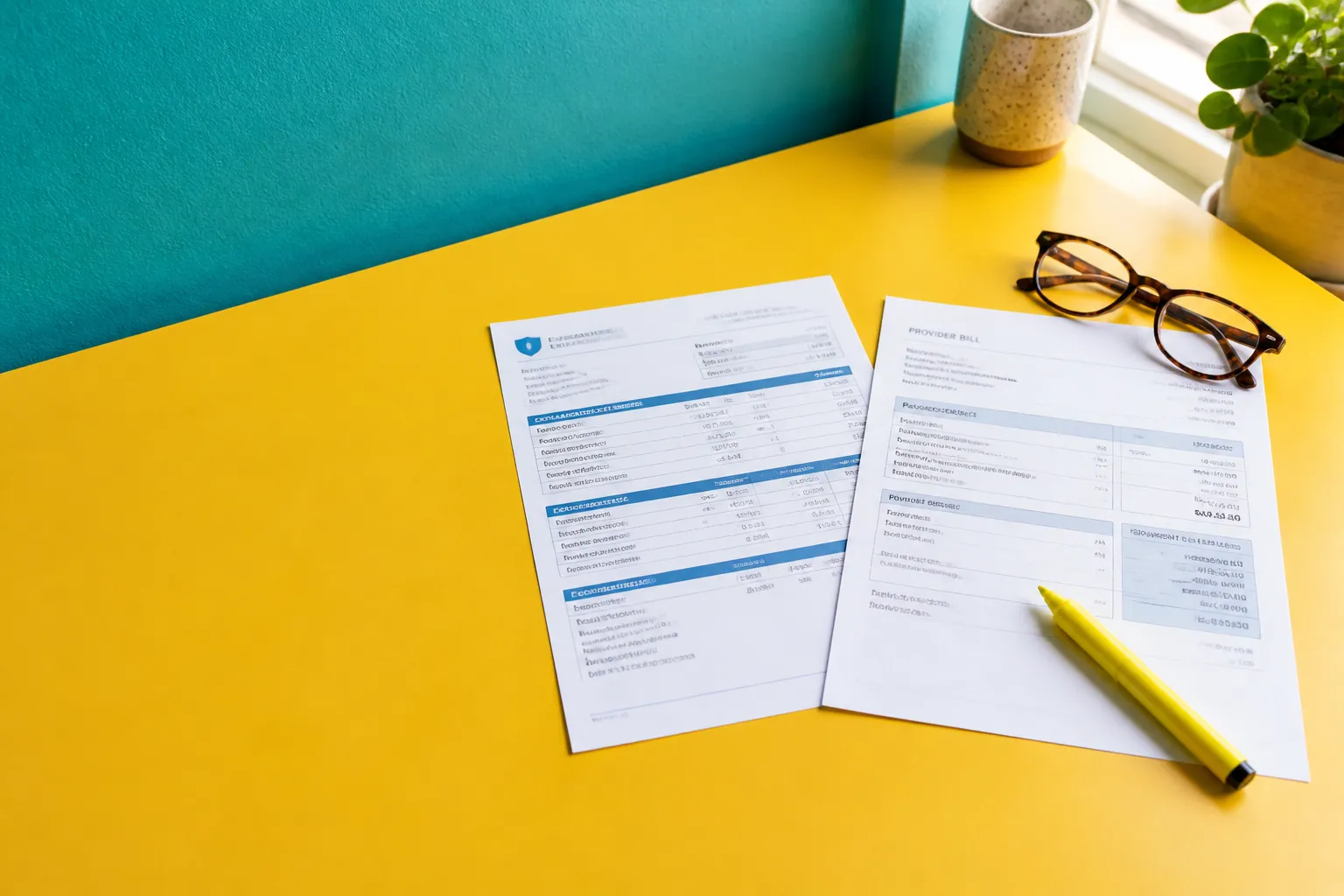
What an Explanation of Benefits Is, and Is Not
Your health insurer sends an explanation of benefits, or EOB, after it processes a claim. It shows what the provider billed, what the plan paid and what you may owe. The layout and labels vary by insurer.
The EOB is not a request for payment. The provider's bill is the document asking you to pay. The two come from different organizations, so a gap between them is a reason to check. It is not proof that one number is right. The Centers for Medicare & Medicaid Services guide to reading an EOB and its guide to reading a medical bill describe the separate roles of the two documents.
Here is a simple example. You get an EOB for a clinic visit, and a few days later the clinic sends a bill. Check that both name the same patient and the same visit. Then see whether the amount the clinic requests fits the EOB's account of what insurance processed. If the numbers differ, ask the insurer or the billing office to explain why.
Check the Bill Before Sending Money
Start with four questions. Do you owe this amount? Are the charges accurate? Was insurance applied correctly? Could financial assistance or charity care help? These are among the checks the Consumer Financial Protection Bureau (CFPB) suggests.
Put the EOB and the bill next to each other. Compare the patient name, the dates of service, the services listed and the amounts. Then look through your own records for payments you already made. These are all reasons to call the billing office before paying:
- The same service is charged twice.
- A service appears that you did not receive.
- A payment you made is missing from the account.
Check the identity details too. The CFPB lists billing in error, including for someone with a similar name, as something to rule out. Confirm the name, date of birth and account number on each document. If one detail is wrong, tell the billing office exactly which one and ask for a review.
Ask for an Itemized Bill and a Review
If a summary statement lacks detail, ask the provider for an itemized bill. The CFPB describes this kind of bill, sometimes called a superbill, as listing each procedure code, the amount insurance paid and the amount you owe. The codes are billing labels for services. You do not have to decode them alone. Ask the billing office to explain any line you do not recognize.
Use the phone number or address on the provider's statement to ask for a review. Be specific. Say that a service appears twice, that you do not recognize a charge, or that a payment is not shown. Ask what the office needs from you and how it will send the result. If the EOB itself looks wrong, contact the insurer and ask how to raise the issue.
Keep a simple log: the date, who you contacted, what you asked and what they said would happen next. Save letters and copies of bills. The sources reviewed here do not give specific dispute steps or deadlines, and those can differ by insurer and provider. Ask each one directly about time limits.
If a Collector Contacts You
A collection notice may not be accurate. The CFPB advises people to pause and review before paying, and it says federal law does not allow collectors to ask you to pay charges you do not owe. That includes charges for services you did not receive, inflated charges and bills you already paid.
Ask for enough information to identify the bill. You can request an itemized bill from a collector as well. Then compare it with your EOB, the provider's statements and your payment records. If you still do not recognize the charge, contact the provider's billing office. Keep copies of the notice and of every message. The CFPB's medical debt collector advisory has more on reviewing a collector's claim.
Address a Balance You Cannot Pay
If the bill looks accurate but is hard to manage, contact the provider before the statement sits unanswered. Ask about a payment plan, financial assistance or charity care, and ask how to apply. The sources do not give eligibility thresholds, so request the provider's current rules instead of guessing whether you qualify.
The CFPB says ignoring a bill can lead to late fees, interest, collection activity and other consequences. It also notes that federal and state law may reduce what you owe and may offer protections from collection and credit reporting. Details vary, so ask questions early and keep communication open.
If insurance denied a claim or paid less than you expected, ask the insurer to explain the decision in writing. Then ask the provider how it is handling the balance while you wait. A confusing bill is a reason to ask questions and keep records. The EOB is not the final word on what you owe.
Please seek a professional. This article is general information, not financial, tax or insurance advice. Please seek a licensed financial, tax or insurance professional about your own situation.


