











A denial letter from a homeowners insurance company is not the final word on your loss, but it is the legal basis on which your carrier intends to stand. Skimming the letter to find the dollar amount of zero guarantees you miss the mechanics of how the adjuster reached that outcome. Reading this document line by line forces you to separate three entirely different problems: administrative documentation gaps, disputed policy interpretations, and errors in the adjuster's factual findings. Every successful dispute begins with isolating which of those three issues the insurer used to reject your payout.
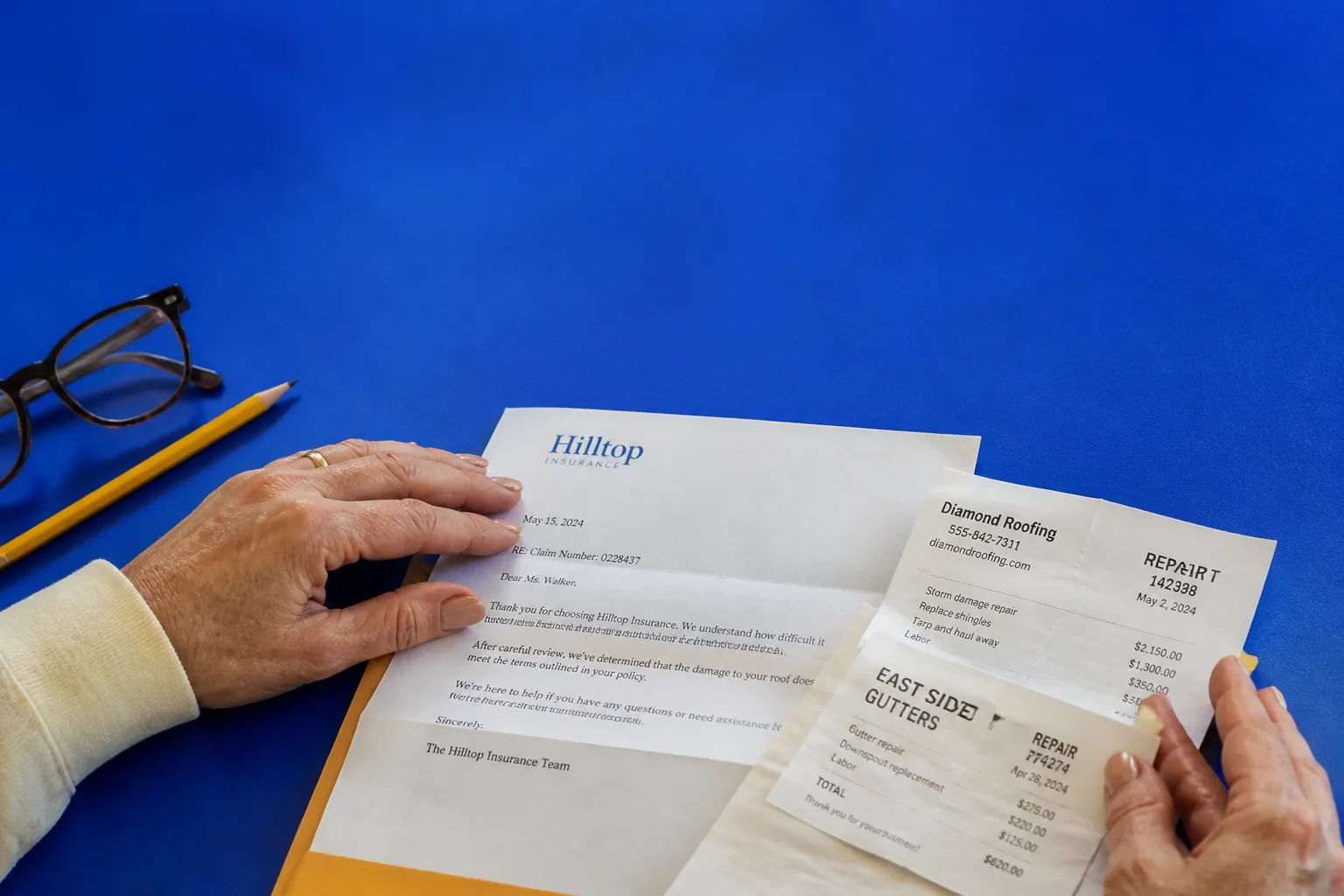
The letter must outline the explicit grounds for the decision, identifying exactly what parts of your claim were covered and what parts were denied. When an insurer relies on vague phrases such as stating that the damage is simply not covered under the contract, it has failed to give you a workable target. You cannot build a factual rebuttal against an assertion that cites no policy provision. If the correspondence omits the specific exclusionary clauses, demand those citations immediately in writing, because a generic refusal leaves the carrier unaccountable for its reasoning.
According to guidance on flood insurance claim denials, claims generally fall apart over missing documentation, misunderstandings about what a policy actually covers, or flat errors in the adjuster's inspection report. Pinpointing the insurer's exact category tells you what evidence you need to mount an answer. A claim stalled by an unsubmitted repair invoice requires an updated receipt, whereas a denial grounded in an adjuster's misidentification of roof damage requires independent inspection reports and physical proof.
If the carrier sends a bare notice without the adjuster's field notes or underlying loss evaluations, do not accept the summary as complete. Request the adjuster's full inspection report, any photographic logs, and any valuation models used in the determination. Forcing the company to show the paperwork behind its refusal places the burden of proof back on the institution that took your premiums.
Check whether the loss is covered at all
Before spending weeks fighting a refusal, verify whether your policy forms cover the underlying peril. Standard homeowners policies routinely exclude specific categories of destruction. As outlined in research from Consumer Reports on homeowners insurance protections, most basic policies do not cover damage resulting from floods, earthquakes, or mold. These events usually demand distinct, standalone policies or specialized endorsements. When a storm pushes surface water across your threshold and into your living room, arguing a standard wind policy denial will fail if water intrusion is expressly excluded.
Homeowners insurance is regulated primarily at the state level. Each state insurance commissioner enforces distinct disclosure mandates, claim handling timetables, and mandatory notification windows. No nationwide template governs every personal lines policy, which means your legal remedies and deadlines hinge on the jurisdiction where the insured structure sits. You must review your specific policy jacket alongside your state insurance department guidelines to confirm what notices the insurer was obligated to deliver.
A critical exception applies to flood claims issued through the National Flood Insurance Program. These federal policies operate under rigid statutory rules rather than local state variations. If you receive a denial on a National Flood Insurance Program claim, you must appeal to FEMA within 60 days of the initial denial date. That 60-day window is absolute. Missing it shuts down your administrative recourse, regardless of how clearly the adjuster miscalculated your loss.
Gather evidence and build the appeal
Constructing an appeal requires compiling an objective paper trail that directly contradicts the adjuster's written narrative. Start by gathering your declarations page, the complete policy form including all endorsements, contractor bids, detailed repair bills, and every photo or video recorded before and after the event. Pre-loss photographs, including real estate listing archives, past home appraisal images, or routine maintenance records, are essential if the insurer claims the destruction existed before the covered date of loss.
State regulatory authorities, such as the Georgia Office of Commissioner of Insurance and Safety Fire, emphasize that policyholders must file claims promptly, keep repair receipts organized, and submit full and accurate details from the beginning. Many contracts include strict notice provisions that require policyholders to report damage within a set number of days. If you notify the carrier late, the company can deny the claim purely on late-notice grounds, even if the physical destruction is obvious.
When you draft the appeal letter, structure it as a formal business brief. Cite the claim number, the policy number, and the specific section of the denial letter you are refuting. Match each denial rationale with corresponding policy clauses and attached exhibits. If the insurer claimed your plumbing failure was caused by long-term seepage, provide a certified statement from a licensed plumber confirming a sudden, accidental pipe rupture. State the exact dollar resolution you are requesting, keep an identical copy of the packet, and send the file using certified mail with return receipt requested so you have legal confirmation of delivery.
Respond to third-party data and disputed images
Property insurers increasingly rely on automated tools, algorithmic hazard scores, and third-party aerial surveillance rather than sending an experienced inspector to walk the property. This practice can lead to arbitrary claim rejections based on flawed or outdated digital information. Reporting by United Policyholders on aerial imaging denials documented a case where a carrier refused roof coverage by alleging wear, tear, and missing shingles dating back three years prior to a storm, relying on an aerial image that the homeowner proved was grainy and blurry.
When a carrier bases its denial on automated assessments or high-altitude photographs, demand to inspect the exact files used to make the determination. Consumer advocacy organizations continue to demand transparency regarding property scoring models, location assessments, and aerial records used by property carriers. You have the right to ask for the high-resolution files, the capture date, and the vendor source for every image in your claim file.
The most effective counterweight to automated aerial imagery is physical, boots-on-the-ground documentation. Secure written inspections from licensed local contractors who physically climb onto the roof, inspect the decking, and measure shingle condition firsthand. If your local roofer provides date-stamped close-ups showing fresh wind creasing or impact damage, that physical evidence directly challenges low-resolution satellite shots captured from miles above the roofline.
Know the questions to ask and the warning signs
Before submitting an appeal, write to your assigned adjuster and require formal answers to several basic questions. Ask for the precise policy clause justifying the denial, the specific third-party vendors or data streams consulted, the hard deadline for filing an administrative appeal, the designated office where appeals must be routed, and whether the company contends that you missed any reporting windows. Getting these answers in writing limits the carrier's ability to change its justification later in the dispute.
Watch for classic industry warning signs. A vague letter that attributes a loss to general wear and tear without documenting the age of the structure is a primary red flag. So is any letter that arrives without an adjuster's line-item estimate attached. These omissions often signal that the insurer hopes the policyholder will abandon the claim rather than demand the underlying records.
Pervasive nonpayment trends make close scrutiny essential. An analysis of major carriers reported by United Policyholders on zero-payout claims found that the five largest home insurance companies as a group paid zero dollars on more than 44% of resolved claims in a recent single year, a sharp climb from 36% a decade earlier. Carriers have systematically raised deductibles, shifted wind and hail deductibles from fixed dollar figures to percentages of the dwelling value, and tightened replacement guidelines for roofs. An initial denial is frequently an automated or initial hurdle, and preparing an appeal is the standard mechanism to enforce your contract.
Where the published guidance stops
Public regulatory documents do not provide a universal, step-by-step roadmap for appealing a standard, private-carrier homeowners denial. Unlike the National Flood Insurance Program, which maintains an explicit 60-day federal administrative process, private insurance contracts set their own internal dispute procedures, appraisal clauses, and appeal timelines. You must locate those procedural rules within your specific policy forms and endorsement pages.
Furthermore, general insurance guides do not explain the exact mechanisms of state insurance department complaint procedures, nor do they detail the practical timelines and financial costs of invoking policy appraisal clauses, independent mediation, or formal bad-faith litigation. If you suspect that a claim rejection stems from unlawful discrimination, federal protections under the Fair Housing Act exist, but pursuing those remedies requires consulting legal counsel or federal civil rights authorities rather than relying on informational guides.
This guide is provided for educational purposes only and does not constitute personal financial, legal, or tax advice. Insurance regulations vary by state, and individual policy contracts govern every dispute. When facing a complex or high-dollar loss denial, consult your state insurance commissioner, an independent public adjuster, or a qualified attorney to review the precise language of your policy.
Please seek a professional. This article is general information, not financial, tax or insurance advice. Please seek a licensed financial, tax or insurance professional about your own situation.


