










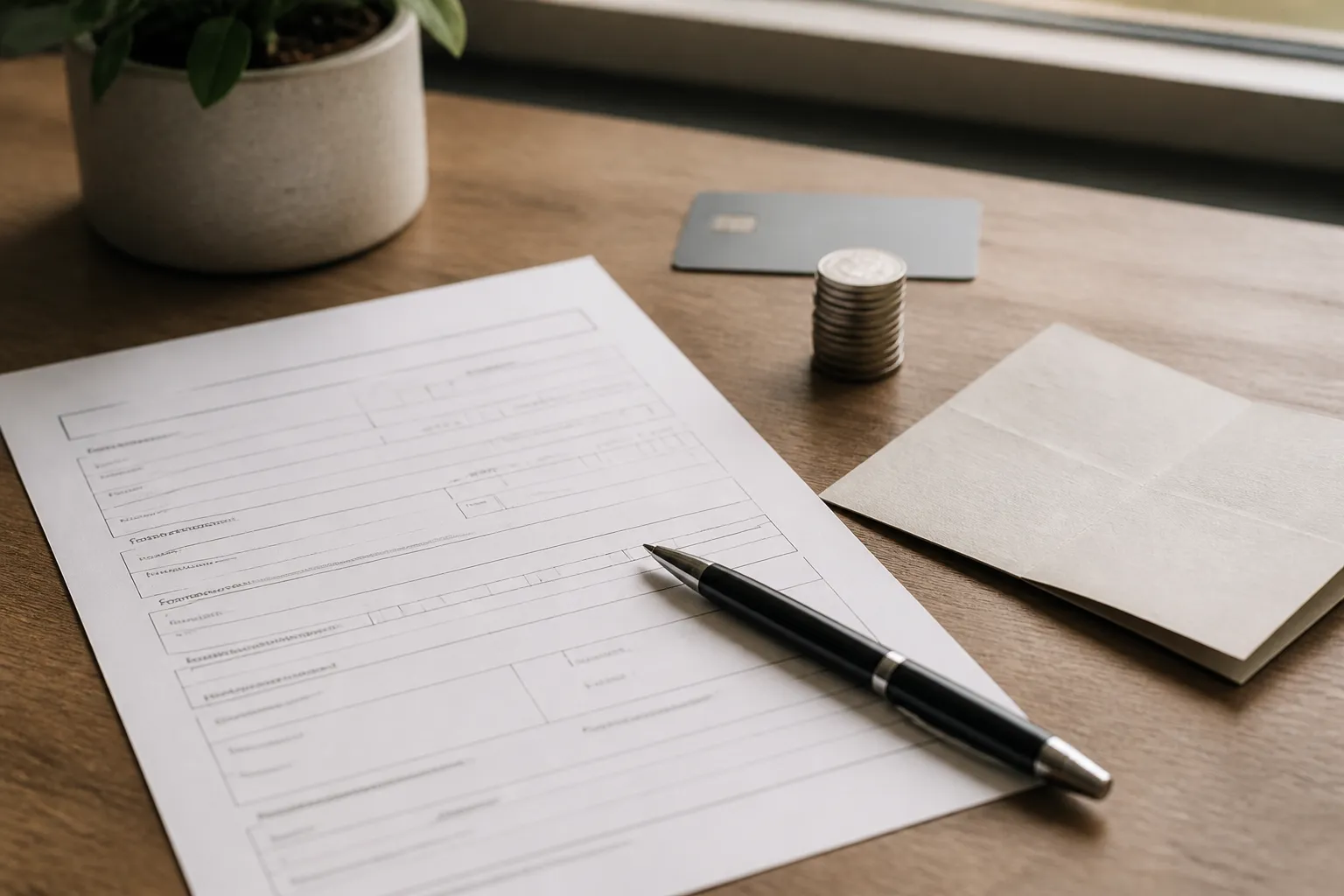
Opening your first bank account can feel like a test of your financial past. In practice, the first questions are usually about your identity, the money needed to open the account, and how you expect to use it. You can check those requirements before you apply, even if you have never had an account.
Two questions can clear up a lot before an application: What identification will you accept, and how much money do I need to open the account?

Start with the identity requirements
Banks and credit unions generally need to verify your name, date of birth, address, and an identification number. That number is usually a Social Security number, although some institutions may accept another number. Having no banking history does not remove the identity check. It does mean you may be gathering this information for an account application for the first time.
Ask the institution which identification numbers and documents it accepts before you start. The basic requirements do not tell you every document a particular bank or credit union will request, or exactly how it will verify your information. If you do not have a Social Security number or the documents you expected to use, ask what alternatives it accepts rather than guessing. The Consumer Financial Protection Bureau’s checking account questions explain the general information institutions need.
Find out what it takes to open the account
A minimum opening deposit is the amount of money you must put into a new account when you open it. A deposit is typically required, but the amount depends on the institution and account. Ask for the exact figure before applying, and distinguish it from any balance you would need to keep later to avoid a monthly fee. Those are two different account terms.
The broad sequence is straightforward: decide which kind of account you need, gather your identity information, confirm the opening deposit, and submit an application. A checking account is designed for regular spending, including debit card purchases, bill payments, checks, and cash withdrawals. If your main goal is paying rent and other bills, ask how those payments work. If you expect to deposit checks, ask how you can do that. The CFPB has a more detailed account-opening checklist you can use to organize questions.
Read the fee terms alongside the account features
An account can meet your needs on paper and still be costly to use. Start with the monthly fee. Some accounts waive it when you keep a specified balance or make regular deposits. Ask what counts toward a waiver and what happens in a month when you do not meet the condition. Then check ATM fees, especially if you often need cash away from a branch.
Overdraft means spending more than the money available in your account. Ask whether the account permits it and what fee, if any, applies. Some accounts do not let you spend beyond your balance, so they do not charge overdraft fees. Overdraft coverage for certain transactions generally requires you to opt in. The CFPB’s bank account resources explain overdraft issues and other common account questions. Compare the fee terms with the way you actually expect to pay and withdraw money, rather than looking only at the monthly price.
For a bank account, check whether the bank is FDIC insured. FDIC insurance protects eligible deposits if an insured bank fails. Deposits are automatically insured to at least $250,000 per depositor at each FDIC-insured bank. That protection addresses bank failure; it does not make an account free of fees. The FDIC’s GetBanked guidance covers both deposit protection and account costs.
Ask when deposits become spendable
Putting a check into an account and being able to spend its proceeds are not always the same event. Banks and credit unions set rules for when deposited check funds become available, subject to a maximum wait set by federal law. Ask about the timing if you plan to use a deposited check to pay a bill. The answer matters more than the moment the deposit first appears on a screen.
According to FDIC guidance, depositing a check at a bank is free. Paying bills by money order can cost more than other methods. If you currently use money orders, compare that recurring cost with an account’s monthly, ATM, and other fees. Also ask how you would report a debit card error or an electronic transaction you did not authorize. Federal protections can apply in certain circumstances, and the FDIC advises notifying your bank right away.
Make room for an answer other than yes
Before applying, you can keep the questions short: What identification do you accept? What is the opening deposit? What are the monthly and ATM fees? Can the monthly fee be waived? Can the account overdraft, and what would that cost? When are deposited checks available? At a bank, confirm its FDIC-insured status as well. Answers to those questions give you something concrete to compare across institutions.
If an application is denied, ask the institution for the specific reason. Negative information from past banking activity can be one reason for a checking account denial, even when someone does not think of themselves as having a banking history. A denial does not answer every question about your options. The CFPB provides guidance on bank accounts and denials, though the general sources here do not spell out how to review or correct a particular banking-history report.
Consider how you will reach your money
For students, access can be as important as the opening requirements. Student loan money may be available without a bank account through a school-issued card, check, or cash. But a student ID card may not work everywhere, and cashing a check without an account may cost money. The CFPB’s student banking guide describes those trade-offs.
A branch near campus or home can be useful if you expect to handle cash or ask questions in person. An online-only bank generally lacks an in-person location, though it may offer ATM access through other banks’ machines. Ask how deposits, withdrawals, alerts, and bill payments work in either model. The best comparison is a practical one: what you need to provide to open the account, what it costs to keep, and how reliably you can use your money once it is there.
Please seek a professional. This article is general information, not financial, tax or insurance advice. Please seek a licensed financial, tax or insurance professional about your own situation.


