








Jury duty arrest threat scams work because they sound official and urgent. A caller says you missed jury service, owe money now, and could be arrested if you do not pay right away. The Federal Trade Commission says to ignore calls, texts, and emails that threaten arrest over missed jury duty. That is the clearest first signal that something is wrong.
How the scam pushes fear first
The message is built to short-circuit judgment. Scammers may say they are from a court, a sheriff’s office, the U.S. Marshals Service, or another agency with legal authority. They may use a real badge number, a case number, or the name of an actual judge to sound convincing. Caller ID can also be spoofed, which means the number shown on your screen may appear to come from a courthouse or a government office even when it does not.
That pressure is not accidental. These calls are often described as panic scams because they try to push people into a fight-or-flight response. In that state, it is harder to slow down, check details, and notice that the story does not fit normal court process. A real court problem does not need a threat designed to force an instant decision.
What payment demands usually give the scam away
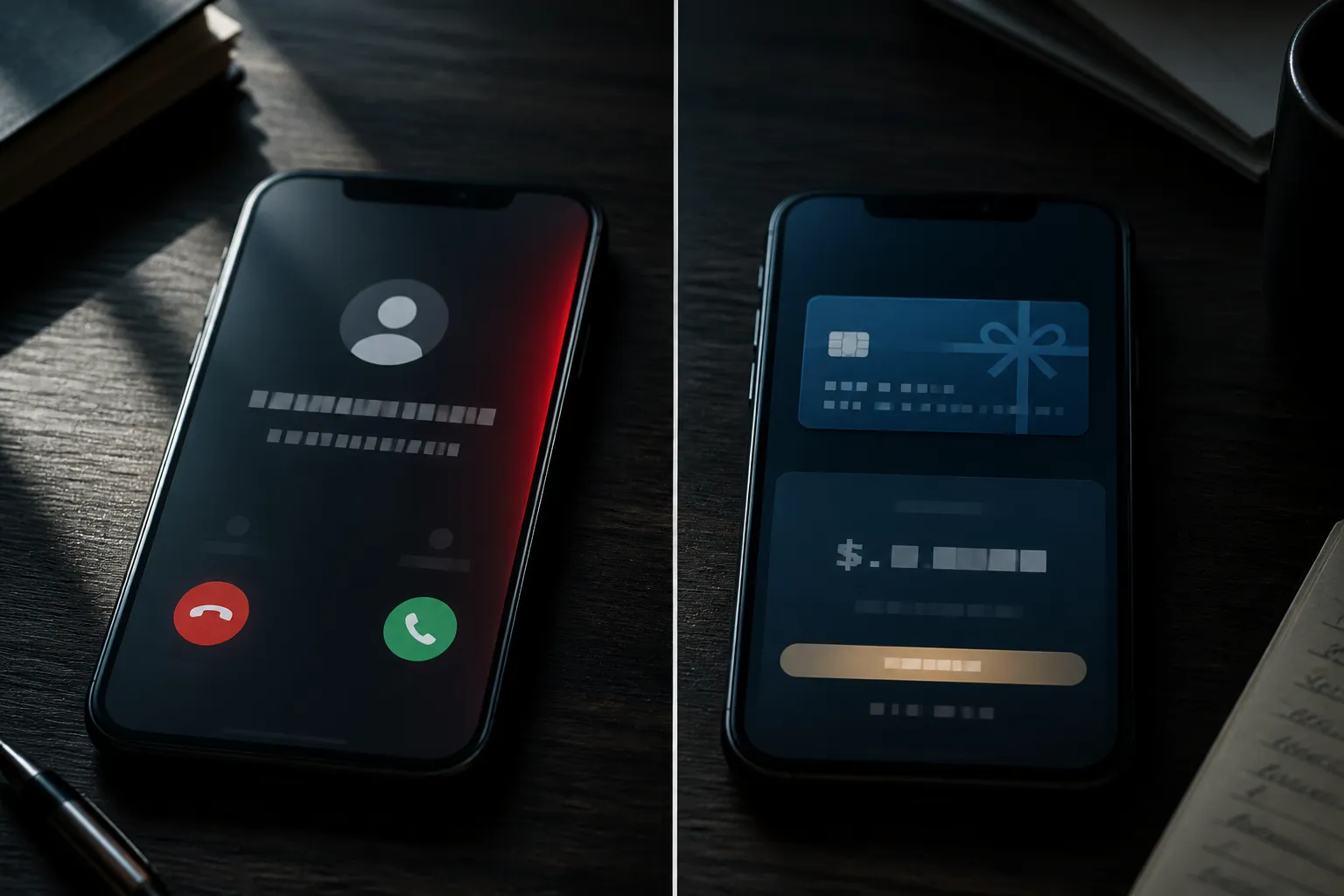
The payment method is one of the strongest warning signs. Scammers commonly ask for wire transfers, prepaid debit cards, gift cards, cryptocurrency, Bitcoin ATM deposits, or cash paid through a retail store. They may tell you to read card numbers over the phone or scan a QR code at the register. Law enforcement agencies say they will not call to tell you to buy a debit card, reload an account, or use a QR code to pay a fine.
Some scams go a step further and ask you to mail prepaid cards to a judge or bring them to a courthouse. Others claim the amount is a fine or bail and it must be paid immediately. Reported demands have sometimes run into the thousands of dollars. A sudden request for that much money is a reason to stop, not a reason to hurry.
What real court contact looks like
If a call sounds suspicious, hang up. Do not use any phone number the caller gives you. Look up the court or clerk’s office number on your own through an official government website, then call that number directly. The U.S. courts say juror scam alerts should be checked through official court contacts, and federal court warnings note that the U.S. Marshals Service and U.S. district courts will not call to request payment of fines over the phone.
Another useful check is simple: ask whether the summons or case can be confirmed using a number you found yourself. A valid arrest warrant is served in person by law enforcement, not by email or text. If the caller says there is a warrant but the only proof arrives through a message thread or a voice call, that is a major red flag.
Questions that help sort real from fake
When a call feels urgent, a few direct questions can slow the interaction down. Ask yourself whether the caller wants payment by phone, wire transfer, prepaid card, cryptocurrency, a Bitcoin ATM, or a QR code. If the answer is yes, treat that as suspicious. Also ask whether the court can verify the summons using a number you looked up on your own, not one the caller gave you.
It also helps to check the form of the threat. If the caller says you will be arrested unless you pay immediately, that fits the pattern of a scam. If the message arrives by text or email and claims to involve an arrest warrant, that is another sign to stop. Real court business has procedures. It does not depend on surprise and pressure.
What to do after a suspicious call
Do not pay. Do not scan the QR code. Do not share bank details, card numbers, cash, or personal financial information. If you are unsure, talk to someone you trust before taking any action. A second set of eyes can make a rushed message sound less convincing.
Then report the scam through the channels named by the agencies involved. The FTC says to file a complaint, and the U.S. Marshals Service accepts tips about federal court scams through its website. If money already changed hands, contact your bank or payment provider right away and keep records of what was sent, how it was sent, and who contacted you. That record can matter later, even if the source material does not spell out the full recovery path.
One county sheriff’s office has warned that these scams are spreading fast, with local reports climbing sharply in a single year. That kind of increase is a reminder that the same script can move from one area to another quickly. A calm callback to an official court number is still the safest next move.
Please seek a professional. This article is general information, not financial, tax or insurance advice. Please seek a licensed financial, tax or insurance professional about your own situation.