










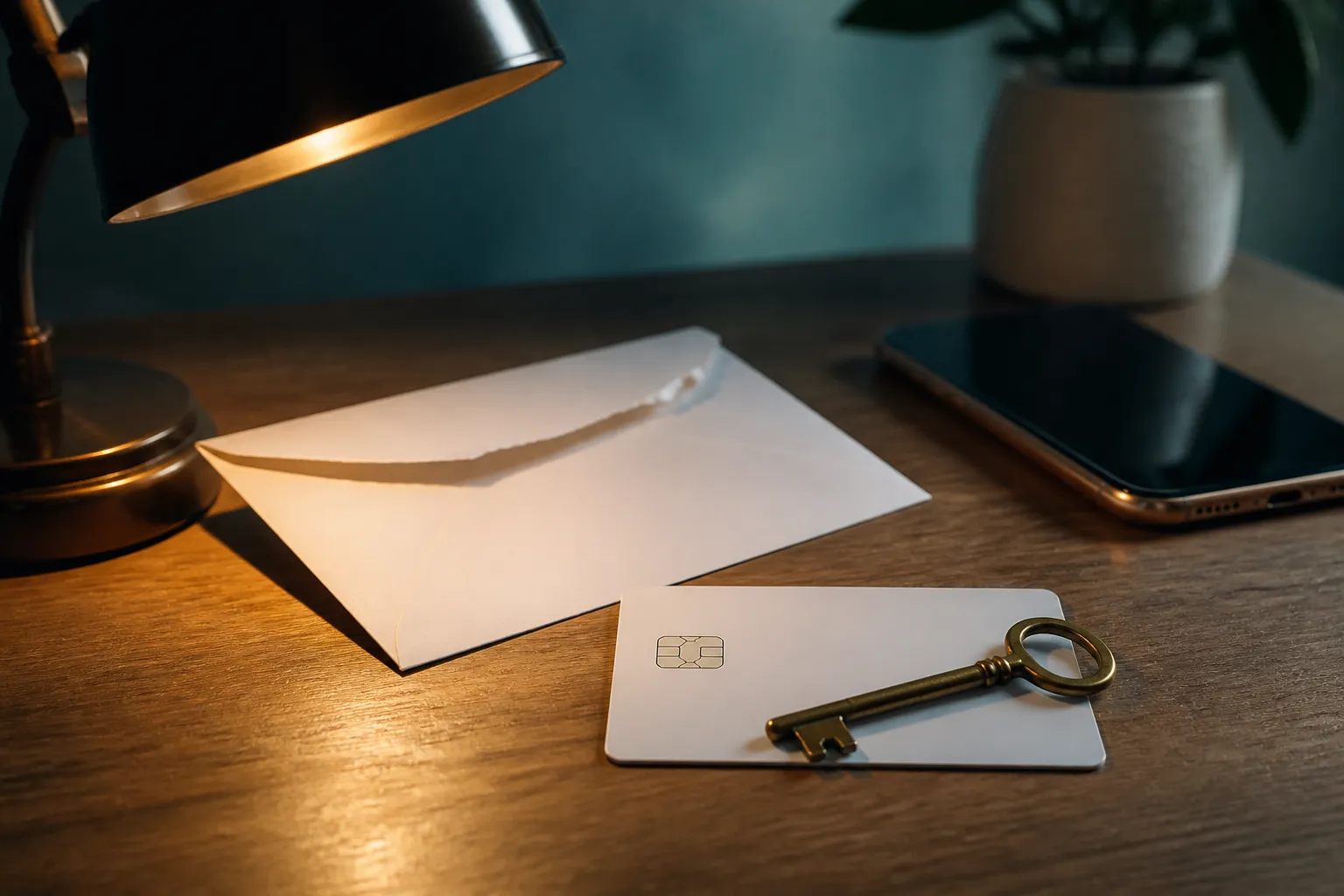
A new credit card often shows up in a plain envelope and does not work yet. That is on purpose. Think of it like a house key that stays dead until you walk in the front door and say it is yours. Here is how to turn the card on without handing a scammer a chance.
Why new cards arrive inactive
Most new credit cards are mailed in a deactivated state to the address on your application. The idea is simple. If the card is stolen or delivered to the wrong mailbox, it cannot be used. The CFPB and HelpWithMyBank.gov both describe this safeguard in their guidance.
So activation is a step you take on purpose, once the card is in your hands. Before you do, look at the envelope. Does it seem opened or resealed? Look at the card too. If anything seems off, do not activate. Contact the issuer (the company that gave you the card) using a phone number or website you already trust.
Activation instructions normally come in the packet with the card. If you cannot find them, both agencies say to call the credit card company. Use the number on the back of the card or on your original account paperwork. Do not use a number from someone who contacted you first.
Common ways to activate and what they usually ask for
Issuers usually offer a few routes. You might see a website address or QR code on the card or paperwork. You might use the issuer's mobile app. Or you might call a number on a sticker or in the packet. One issuer's activation guide lists all three. Your own paperwork is the reference point. If a method does not match it, pause.
Online or app activation often asks for the expiration date, the three-digit security code, and the last four digits of the card number. Some issuers also ask you to verify your identity or create an online account first. That is normal. A request for more than the issuer's own instructions describe is not.
Phone activation usually means confirming who you are and entering the card number or security code. A real representative will not ask you to read out a one-time passcode or a password. A one-time passcode is a short code sent to your phone to prove it is you. Keep it private, even when the request sounds routine.

Protecting yourself during activation
Scammers like this moment. They pose as bank staff, customer support or tech support. The FBI's Internet Crime Complaint Center reported more than 5,100 complaints of this kind of account takeover fraud since January 2025, with losses above $262 million. That figure comes from its November 25, 2025 alert. Treat any unexpected contact as unverified until you confirm it yourself.
Before you type card details into a website, make sure you are on the issuer's official site. Type the address yourself, or use the contact details printed on the card or paperwork. Fake sites can show up through search ads, so a top search result is not proof.
Watch for messages that claim there are fraudulent transactions and tell you to click a link. That is a common phishing tactic. Phishing means tricking you into giving up private information. If you doubt a message, hang up or close it. Then call a number you have verified. A caller who says they are law enforcement and asks for account information after a bank contact is another warning sign.
If activation does not work or something looks wrong
If the card will not activate after you follow the instructions exactly, call the issuer at the number on the card or paperwork. Ask whether the card was already activated. Check whether the issuer's app or site shows the card's status. Write down the date and time of each attempt.
If the card never arrived, or you think someone else tried to activate it, tell the issuer promptly. The FTC advises acting fast when a card is lost or stolen. If a replacement card comes after a loss report, activate it as soon as it arrives.
The sources I reviewed do not lay out detailed steps for disputing unauthorized charges. They also do not explain how activation affects credit reports. For current procedures, check the issuer's official site or the FTC's consumer pages. The FDIC also offers general guidance on card billing issues. This article is education only, not personal financial, legal or tax advice.
Please seek a professional. This article is general information, not financial, tax or insurance advice. Please seek a licensed financial, tax or insurance professional about your own situation.


