











You buy a laptop on a credit card. A few days later, your card app offers to split that charge into equal monthly payments. It sounds simple. But the plan changes how the purchase shows up on your statement, and the details vary by issuer. Let's walk through it step by step.
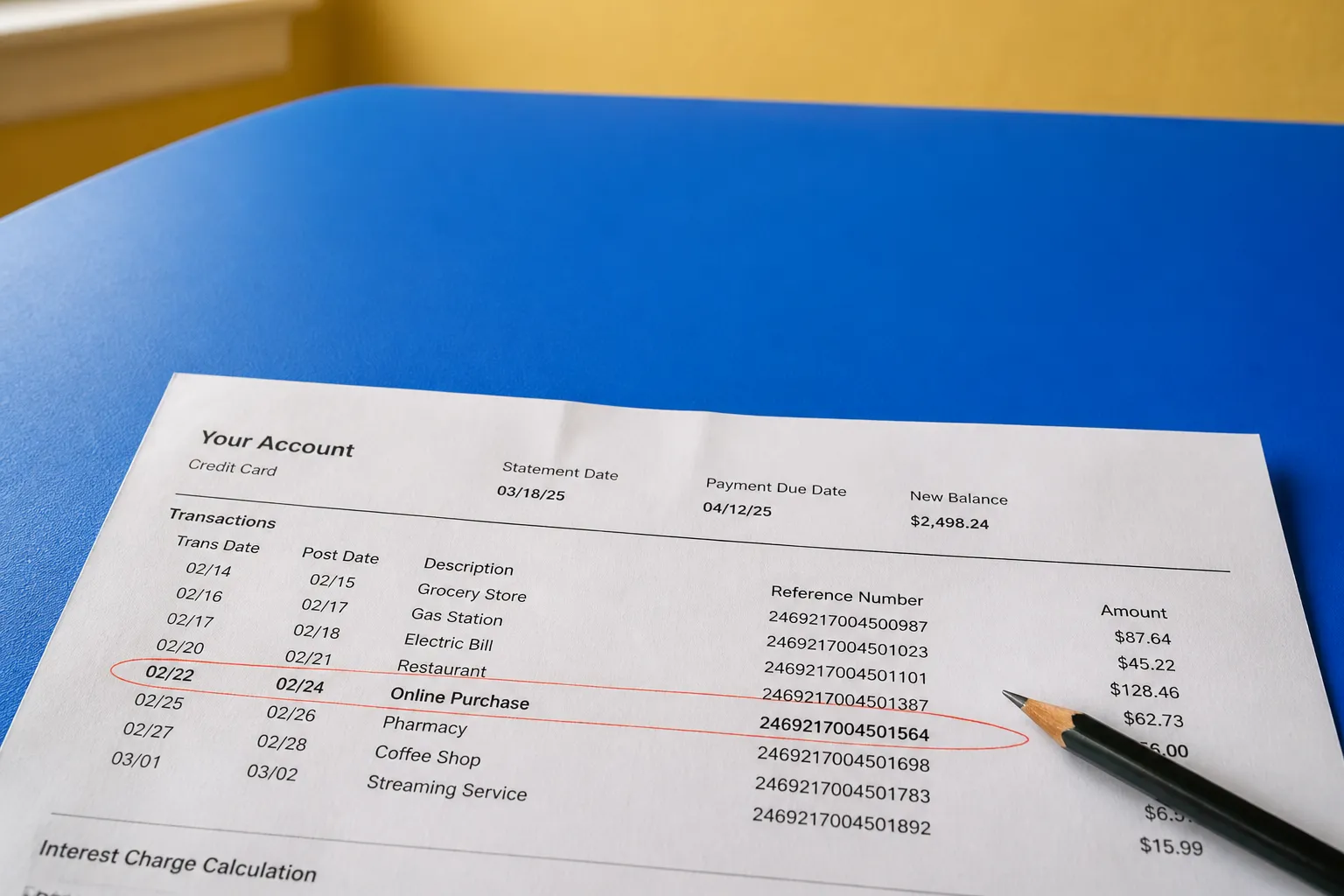
First, a few terms. An issuer is the bank or company that gives you the card. An installment plan splits one eligible purchase into fixed payments over a set number of months. APR is the annual percentage rate, the yearly cost of borrowing on the card.
The purchase is still a credit card charge. What changes is the schedule. Instead of sitting in your balance at the usual purchase rate, the amount moves onto a fixed plan with a known end date.
What an issuer installment plan is
Plans like this usually let you pay off an eligible purchase over several months, often with no interest or a low interest cost. Eligibility rules differ. One large issuer allows qualifying purchases of $75 or more to be split into fixed monthly payments. It does not ask for a separate application or credit check, because the feature is treated as a benefit of the card. Another issuer's after-purchase option covers eligible purchases of $100 or more. An online retailer's checkout financing option asks for a cart total of $50 or more.
So the same purchase might qualify in one place and not in another. A major card network describes its installment tools as letting cardholders repay on an agreed schedule using a card they already have. That is a general description. The issuer's own terms control the details. You can read the network's overview for the big picture.
How the payments show up on the account
At one issuer, the installment payment is added to your Minimum Payment Due each billing cycle until the plan is paid off. Read that twice. Your required monthly payment can go up after you start a plan, even if you buy nothing new.
Many issuers show a summary before you confirm. At one, you see the monthly and total Plan Fees, or the monthly payment and total cost. Read that screen slowly. It is the clearest answer to what you will be billed. At that issuer the steps are short: open online banking or the app, look at eligible transactions, pick one, choose a plan, review, and confirm.
Some issuers say you can keep earning points, miles, cash back or rebates on eligible purchases while on a plan. Check your card agreement before you assume it.
What the plan costs
Costs are built in different ways. At one issuer, a fixed monthly Plan Fee takes the place of interest on the converted purchase. The fee depends on plan length, the APR that would otherwise apply, and other factors. Some plans there carry a fixed APR instead.
At another issuer, the after-purchase option is described as no interest with a fixed monthly fee. Its checkout option uses a fixed APR that is the same as or lower than the standard variable purchase APR. A plan can look interest-free and still carry a fee. So the number to compare is the total dollar cost.
The fee is charged every month for the whole plan. A longer plan can cost more in total even when each monthly payment looks smaller. The sources do not compare these costs with standard card APRs for a typical balance. You would have to work that out from the figures shown for your own purchase.
Early payoff and exclusions
At one issuer, there is no prepayment penalty if you pay the plan off early. That is one issuer's term, not a rule for every card.
Exclusions matter too. At that issuer, purchases that carry foreign transaction fees are left out, and other exclusions may apply. Timing counts as well. You choose from transactions in the current or last billing cycle, so an older purchase may no longer be available to convert.
Questions to ask before confirming a plan
- Is the charge a Plan Fee, a fixed APR, or both, and what is the total cost in dollars?
- How long is the plan, and how does length change the monthly fee?
- Can I pay it off early, and is there a penalty?
- Will I still earn rewards on this purchase?
- Is the purchase eligible, and did it post in a covered billing cycle?
Write the answers down. Then compare them with what paying in full would cost you.
Gaps in the available information
Some important questions are not answered by the sources reviewed. They do not explain what happens if you miss a payment, including late fees or effects on the plan. Check the card agreement and the issuer's disclosures before you enroll.
They also do not say whether installment plans are reported to credit bureaus. This article does not predict any credit score result. Nor do they explain what happens to a plan if the purchase is returned or refunded, or which dispute rights apply. The Consumer Financial Protection Bureau and the Federal Reserve publish general guidance on credit cards and buy now, pay later products. Those government sources are the best place to check how the rules are treated more broadly. This article is educational only and is not personal financial, legal or tax advice.
Please seek a professional. This article is general information, not financial, tax or insurance advice. Please seek a licensed financial, tax or insurance professional about your own situation.


