











You spot a charge you do not recognize, or one that is wrong. You tell the card company. Then comes the quiet stretch where nothing seems to happen. This guide walks through what the rules generally say about that stretch, step by step. It is education only, not advice for your situation.
Start with a written billing error notice
A phone call is a fine first move. But the Consumer Financial Protection Bureau (CFPB) says a call alone may not protect your rights. The rules turn on a written notice, which the law calls a billing error notice. It is simply a letter that says which charge you dispute and why.
The Fair Credit Billing Act (FCBA) is the federal law that sets these rules. It covers credit cards and other revolving credit. It does not cover debit card transactions. Your written notice generally needs to reach the card company within 60 calendar days after the statement showing the charge. Count from the statement date, not the day you noticed the problem. That is where many people lose time.
Keep a copy of the letter. Keep a dated log of every follow-up call. Put it all in one file.
What the card company must do next
Once the company gets your notice, clocks start. It has 30 days to send a letter confirming it received your dispute, unless it has already finished resolving the error in that time. The law also calls for resolution within two billing cycles, and no later than 90 days.
These dates give you a reference point. If 30 days pass with no letter, write that down and mention it in your follow-up. The sources I reviewed do not say what happens if a company misses a deadline. Your card agreement is a good place to look. The CFPB also runs a Credit Card Agreement Database. The FTC enforces the FCBA.
Payments and charges while the dispute is open
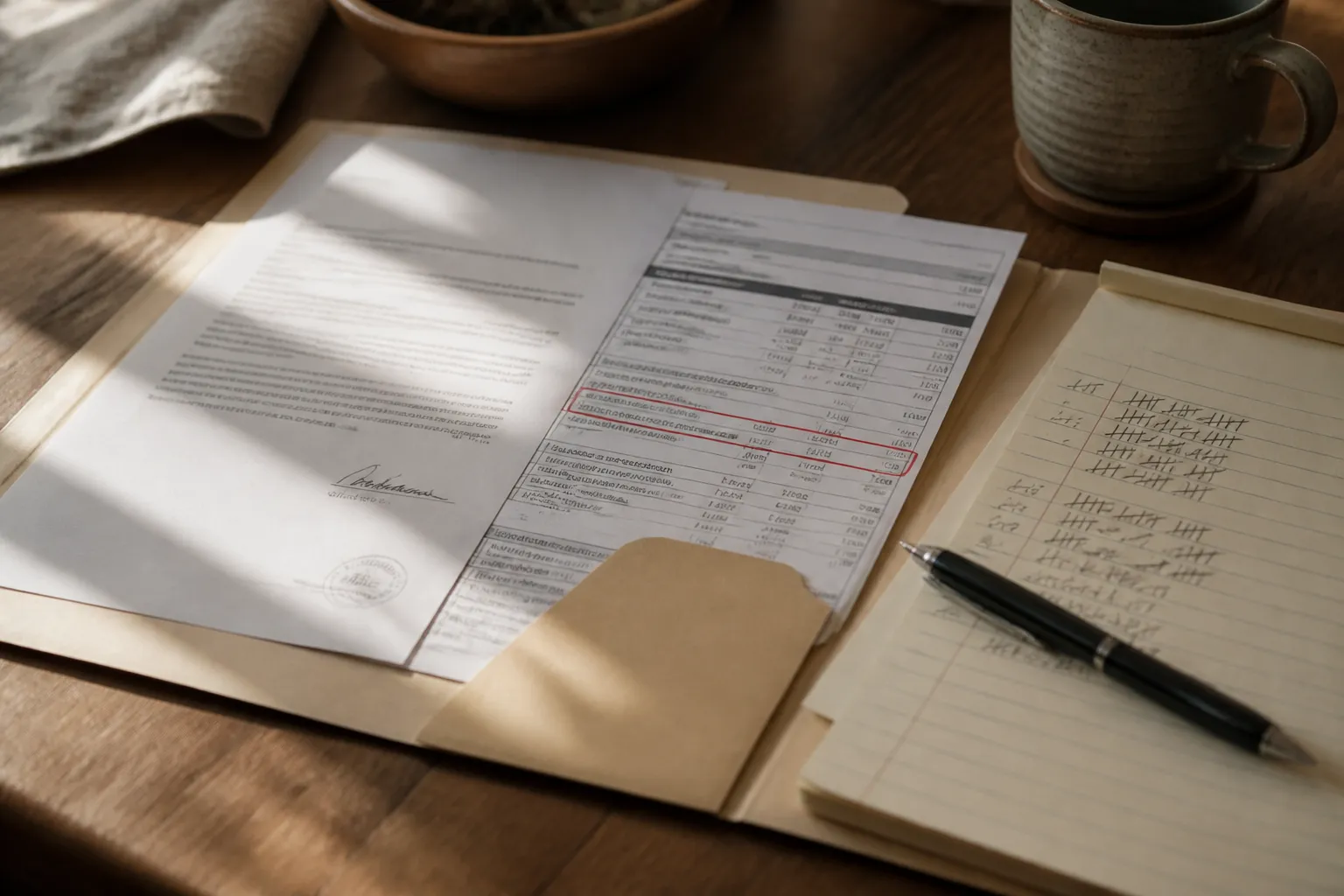
While a written dispute is under review, you generally do not have to pay the disputed part of a required payment. The bank may not try to collect it. That covers related finance charges and other charges on that amount too.
The rest of your balance is a different story. The undisputed portion is still due on time. A late payment on the part you do not dispute is a separate problem, and it can cost you.
So read the statement with a pencil. Mark the disputed amount. Write down what remains. Pay that part as usual.
One open question: the sources do not say how interest already charged on the disputed amount is handled when the review ends. Ask the company to explain that in writing.
Outcomes, paid charges and what is not yet clear
If the company agrees you are right, it must remove the charge from your bill. If it decides the bill is correct, it must explain why in writing. It must also say how much you owe and when payment is due.
What if you already paid? You can still dispute the charge. But you probably will not see that money back until the company decides in your favor. Plan around that wait. Charges for defective goods may follow a different dispute process, so check that separately.
Some things I could not confirm from the sources:
- How a provisional credit (a temporary credit while the review runs) works, or whether it must be given.
- Whether a pending disputed charge can be reported to the credit bureaus.
- How to file a complaint with the CFPB or FTC if a dispute stalls.
Those are worth asking the company about directly. The CFPB and FTC both publish consumer guidance if you need a next step.
A short checklist before you send anything
- Did I send a written notice within 60 days of the statement?
- Did I keep a copy and log my calls?
- Is the disputed amount separate from what I still owe?
- Has the 30-day confirmation letter arrived?
None of this guarantees an outcome. But a clear paper trail makes a confusing process much easier to follow.
Please seek a professional. This article is general information, not financial, tax or insurance advice. Please seek a licensed financial, tax or insurance professional about your own situation.


