











When an evacuation order sounds or floodwaters creep toward the foundation, you will not have time to hunt down deed papers, decipher policy exclusions, or track down login credentials for your mortgage servicer. The Consumer Financial Protection Bureau emphasizes that establishing an organized file before an earthquake, hurricane, or wildfire strikes saves immediate cash, prevents unnecessary stress, and protects legal rights when local infrastructure collapses. Yet most households remain unprepared until disaster forces their hand. Take these immediate steps to secure your financial foundation before an emergency occurs.
- Collect critical account identifiers, including loan numbers, insurance policies, utility accounts, and basic personal identification records.
- Inventory household assets room by room using date-stamped photographs or clear video files to establish a clear paper trail for property adjusters.
- Store emergency cash in small denominations within a certified fireproof and waterproof home safe to handle local power grid failures.
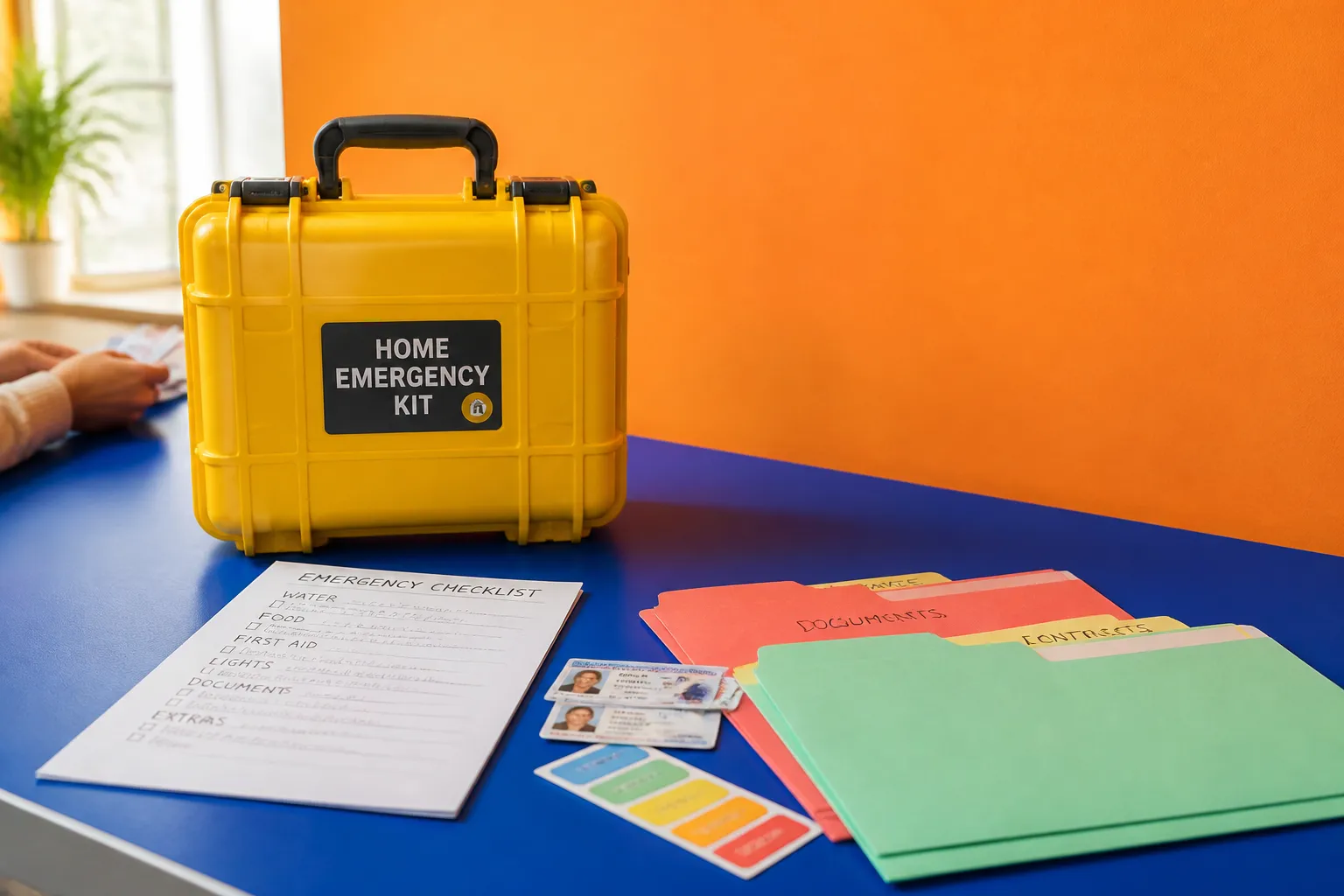
- Back up property deeds, medical summaries, and powers of attorney using verified tools such as the federal disaster digital backpack or printed emergency kits.
- Separate short-term liquid reserves from regular checking balances to prevent accidental spending while maintaining immediate liquidity.
- Establish strict verification habits for all post-disaster relief communications to shield relief funds from predatory charity fraud.
Why preparing ahead matters
Federal guidance makes one point clear: the worst time to organize your financial life is during an active crisis. The Consumer Financial Protection Bureau explains that advance disaster planning protects families from compounding a physical emergency with a prolonged financial disaster. In the aftermath of a severe storm or fire, cell towers go dark, power lines fail, and local bank branches often shutter their doors for days or weeks. Navigating insurance adjusters, government grant applications, and temporary housing stipends requires clear personal data that you cannot easily retrieve from a damaged computer or a soaked filing cabinet.
Despite these high stakes, widespread inertia leaves millions exposed. According to an April 2025 survey conducted by the AICPA and The Harris Poll, 32 percent of Americans have taken zero financial steps to prepare for a natural disaster. At the same time, 66 percent acknowledged that a severe weather event would inflict a major or moderate financial impact on their household. That disconnect between recognized risk and actual readiness creates severe hardship. Organizing your records today removes the chaos of administrative panic tomorrow, putting your household far ahead of the recovery curve.
Gather your key financial documents
A complete disaster file contains far more than a passport and a birth certificate. The CFPB advises consumers to compile a comprehensive dossier that covers every active liability and legal entitlement. This includes account numbers and primary contact details for mortgages, vehicle loans, personal lines of credit, utility providers, and property insurance carriers. In addition, you must assemble identity documentation, home and vehicle titles, prior tax returns, employment verification records, immunization records, medical summaries, wills, healthcare directives, and powers of attorney. Keep a physical ledger of master passwords and account security keys, because two-factor authentication codes often fail when mobile networks collapse.
You do not need to invent an organization system from scratch. Federal authorities offer structured frameworks to simplify the collection process. You can use the joint CFPB and FEMA disaster checklist, or reference FEMA's Emergency Financial First Aid Kit through the AFCPE financial preparedness resources. The free FEMA mobile app also provides a Digital Backpack feature, allowing users to save encrypted digital copies of property deeds and vital records directly on a mobile device. Whether you choose paper binders, an app, or an external drive, ensure that at least one trusted relative or co-signer understands how and where to access these records in an emergency.
Speed is critical during an evacuation. A thorough binder does little good if it is locked in an inaccessible attic or scattered across unorganized digital folders. The CFPB urges consumers to establish an intuitive filing structure that allows anyone in the home to grab critical papers in under two minutes. Keep in mind that while digital backups offer portability, you must handle digital storage with care. Storing unencrypted social security numbers or banking passwords on unvetted cloud platforms creates unnecessary identity risks, so review your digital privacy practices before uploading sensitive records.
Build an emergency fund you can actually access
Cash flow stops abruptly when a disaster knocks out retail payment networks and regional banking systems. Guidance from the AICPA on financial action plans highlights the necessity of maintaining physical currency in a fireproof, waterproof residential safe. In the immediate wake of a severe disaster, grocery stores, gas stations, and building supply centers frequently operate cash-only registers because point-of-sale terminals lose internet connectivity. Keep small denominations on hand, as merchants facing a disruption may not have change for large bills.
Beyond physical currency, place the remainder of your liquid safety net into a designated account, such as a high-yield savings account that remains entirely separate from everyday checking. When emergency reserves mingle with operational funds, they tend to erode through routine spending. Having accessible liquid reserves prevents consumers from taking desperate, costly measures during a crisis, such as pulling cash early from tax-advantaged retirement accounts, taking second mortgages, or running up high-interest credit card balances. The 2025 AICPA and Harris Poll survey showed that only 27 percent of Americans started or expanded an emergency fund over the prior twelve months. Building even a modest cushion provides immediate breathing room when unexpected hotel bills and repair deductibles arrive.
Pair your liquid cash strategy with a thorough review of your property insurance coverage. Most standard homeowners policies exclude damage from rising water. For flood protection, the National Flood Insurance Program provides federal backing, with resources available through FloodSmart.gov. The AFCPE notes that no home is entirely immune from flood risks, making structural coverage an essential review item. Document your assets before disaster strikes by recording a detailed video inventory of all personal possessions, capturing serial numbers, electronics, furniture, and tools to support any future insurance claim adjustments.
Watch for post-disaster fraud schemes
Natural disasters bring out community solidarity, but they also draw predatory operators looking to exploit confusion and grief. The AICPA and Harris Poll data revealed that 37 percent of Americans experienced financial fraud following a natural disaster. Criminal enterprises capitalize on displaced residents who need urgent debris removal, roof tarping, or temporary shelter. They also target well-meaning donors across the country who want to send aid to affected regions.
The financial scale of these operations is staggering. According to the Journal of Accountancy disaster fraud analysis, the FBI Internet Crime Complaint Center recorded more than 4,500 complaints in a single year resulting in an estimated $96 million in losses from sham charities and fraudulent relief campaigns. Con artists routinely deploy fake social media profiles and generative artificial intelligence tools to mimic legitimate relief agencies, tricking victims into handing over personal identifying information or wiring funds directly to offshore accounts.
Protecting yourself requires discipline and skepticism. Never release policy numbers, banking details, or identity documents to unsolicited contractors or inbound callers claiming to represent government agencies. If an individual presses you for immediate payment or demands personal account data to expedite an insurance claim, pause immediately. Legitimate disaster relief organizations and federal adjusters do not demand gift cards, wire transfers, or immediate processing fees. Having your financial documents organized ahead of time serves as your best defense. When you know your exact policy numbers, insurer contact lines, and account balances, unauthorized callers cannot manipulate you with false claims or fabricated urgency.
Please seek a professional. This article is general information, not financial, tax or insurance advice. Please seek a licensed financial, tax or insurance professional about your own situation.


